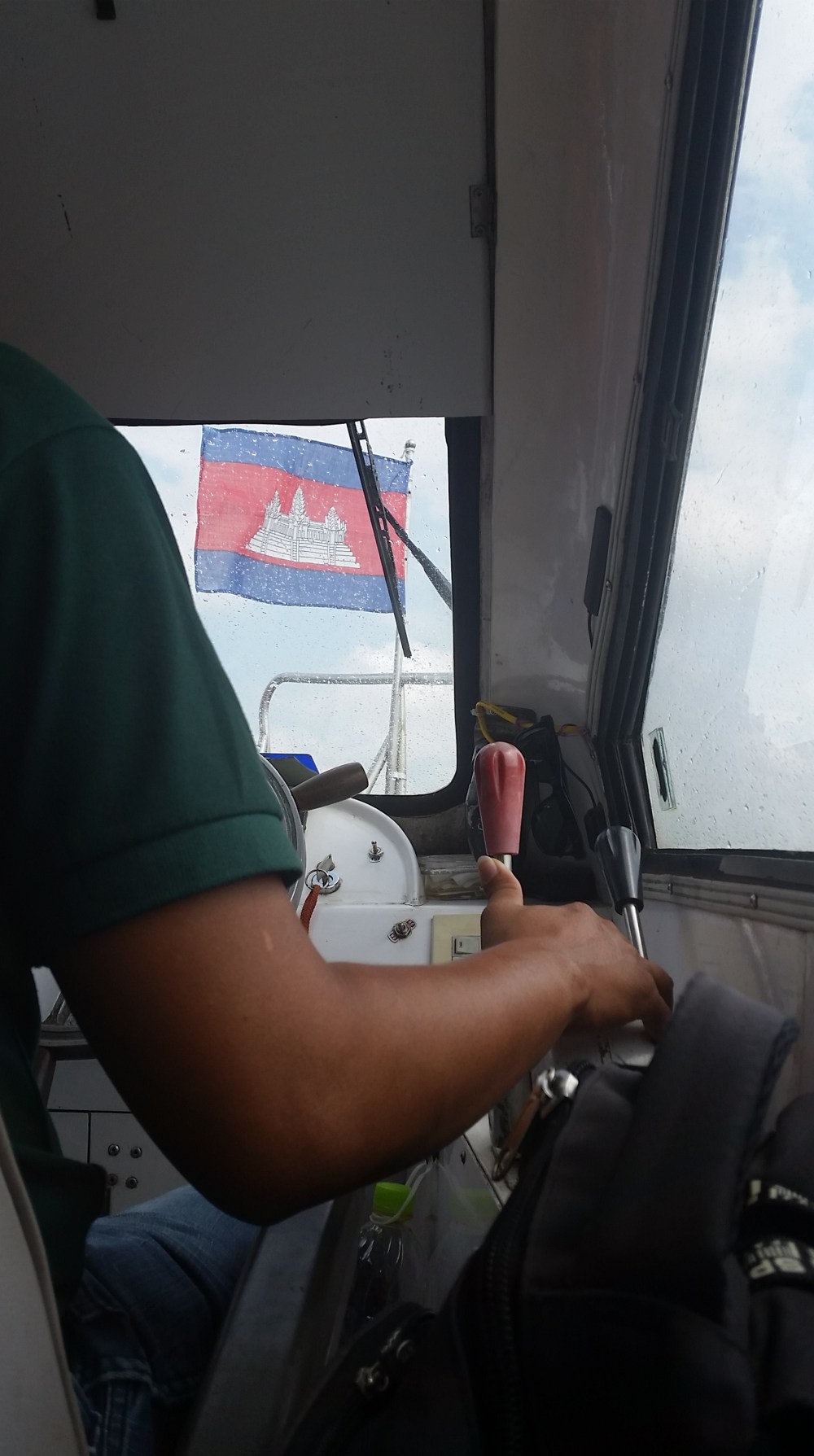
Once we transferred onto the speed boat and started to say goodbye to Vietnam and the Mekong Delta, the scenery changed. The countryside appeared flatter nearly immediately after crossing the border. Our time at border control was easy. We filled out forms on the boat, attached our passport photos and the money, handed over our passports to the crew and they did everything for us. We stopped twice. Once to exit Vietnam and another to enter Cambodia. A lot of people had told us horror stories about entering Cambodia from the Thai side, saying the people were unfriendly and rude. This wasn’t the case at all, we had such a lovely crossing full of smiley people. I am so glad we decided to travel through the Mekong and up to Cambodia that way. We avoided a long bus ride and also got to see one of our favourite places in Vietnam.
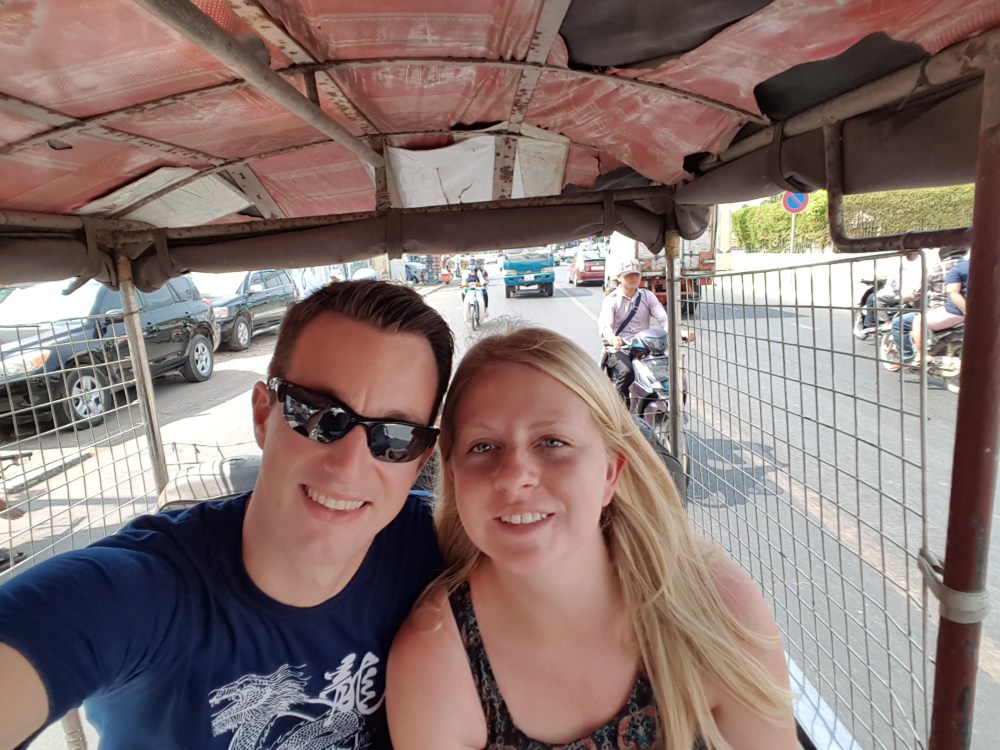
On arrival in Phnom Penh, the capital of Cambodia, we hit the ground running. We were able to negotiate a good price for a tuk tuk from the ferry pier to our hotel after a few drivers and a lot of walking away. In Cambodia they use 2 currencies. US dollar for notes and larger transactions and Riel for small change as they don’t have US coinage. Very confusing. Our hotel was lovely, but we didn’t spend long there before we headed out for some food and to the Tuol Seng Genocide Museum.
We ate lunch at a place called Spider cafe. So… guess what? Eating spiders, particularily tarantulas, is a delicacy here. Yuck! Needless to say, we did not order the tarantula salad and stuck with safer options. We headed off to the Genocide Museum after this with Christina and Annuska to be faced with some horrible history.
I have completed a lot of research and reading into the dark history of the Khmer Rogue regime during 1975 to 1979. Unfortunately, just as the Vietnamese war ended another dark time came for the Cambodian people. Pol Pott was the leader of the Khmer Rogue. His aim was to create a unitarian country whereby everyone was equal. In reality is created a very small minority of ‘elite’ rich people and a mass majority of very poor, malnourished and homeless people. Within 3 days all of the main towns and cities were evacuated. People were told that it was temporary and that they could return to their homes shortly. They didn’t return for nearly 4 years. During this time families were split up and people were sent to villages to work ion the farms. Anyone who was educated was murdered as they were seen to be a threat so most people pretended to be of a farming background. The idea was to have more people working the land so that Cambodia became more self sufficient. People often worked 17 hour days, received hardly any food and were brutally punished and attacked. During this time between 1/4 and 1/3 of the entire population was murdered. It was a very very dark time. Someone told me to look around at the population of Cambodia and when you look, you realise, most people you see are in their 30s or younger. There is definitely a young population here.
Please read my previous blog about the book ‘At first they killed my father’. https://dowellmegamoon.wordpress.com/2016/03/05/a-dark-history/
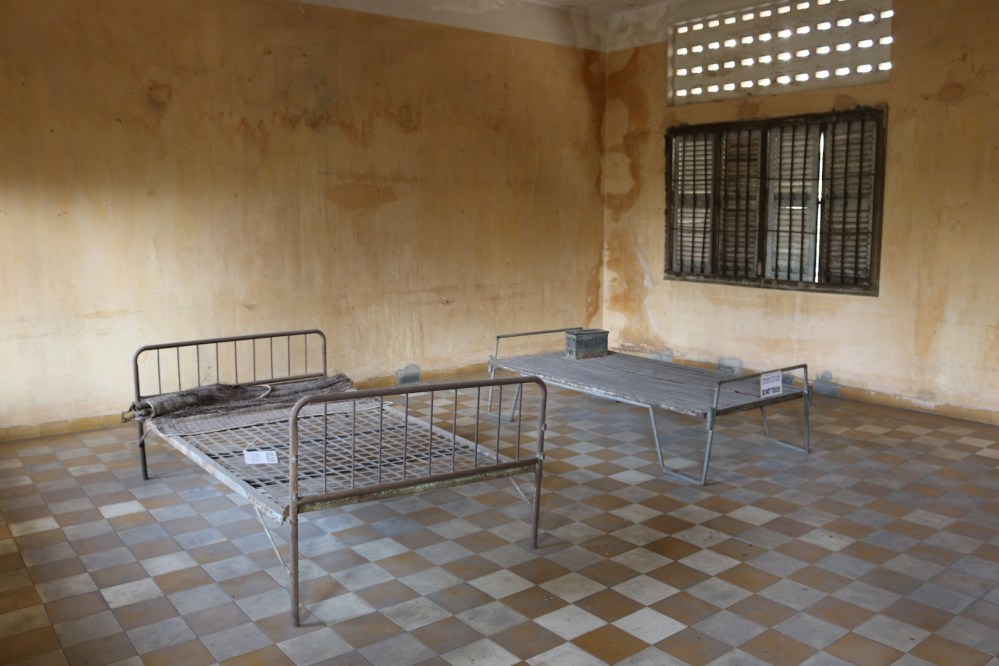
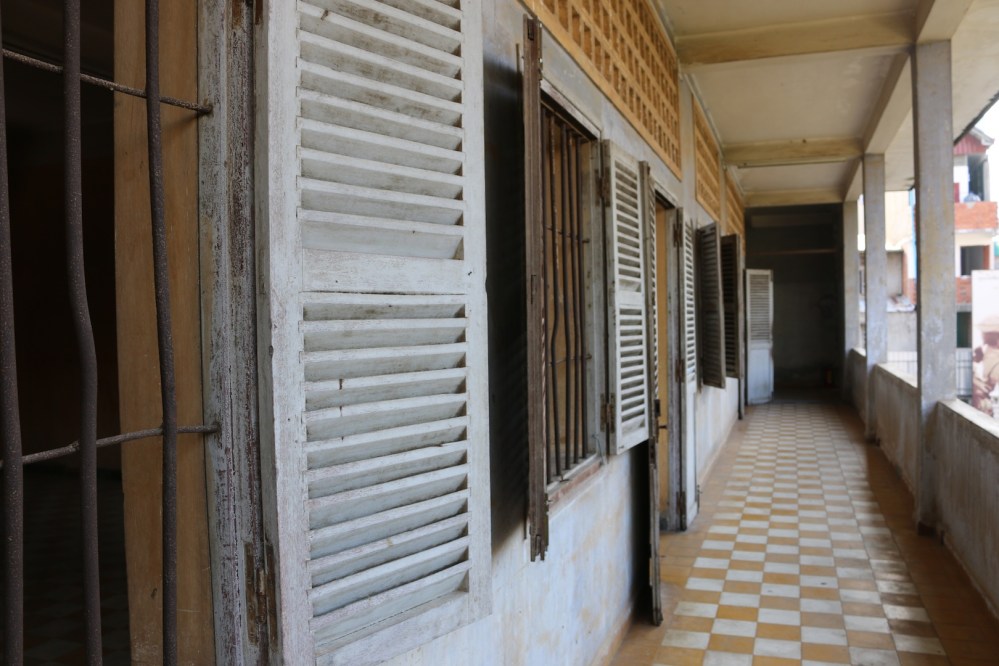
The Tuol Seng Museum is the old site of the S21 prison. This prison was originally a school, but when the Khmer Rogue took control in 1975 the regime banned education except towards the revolution and turned the school into a torture and interrogation prison. There were 4 prison blocks that we could walk around. We didn’t get the audio guide as I felt I knew enough already and wanted to just absorb the place. What hit me the most whilst walking around was how many people had died on these grounds. Approximately 20000 people were held at this prison during the regime and initially it was believed that only 7 people left alive. It’s now believed that number is closer to 180 people. The prison held children, women and men. As we walked around we saw some torture devices, the small prison cells and the graves of the last 14 prisoners. It was very sad to see how these people had been treated for often doing nothing.


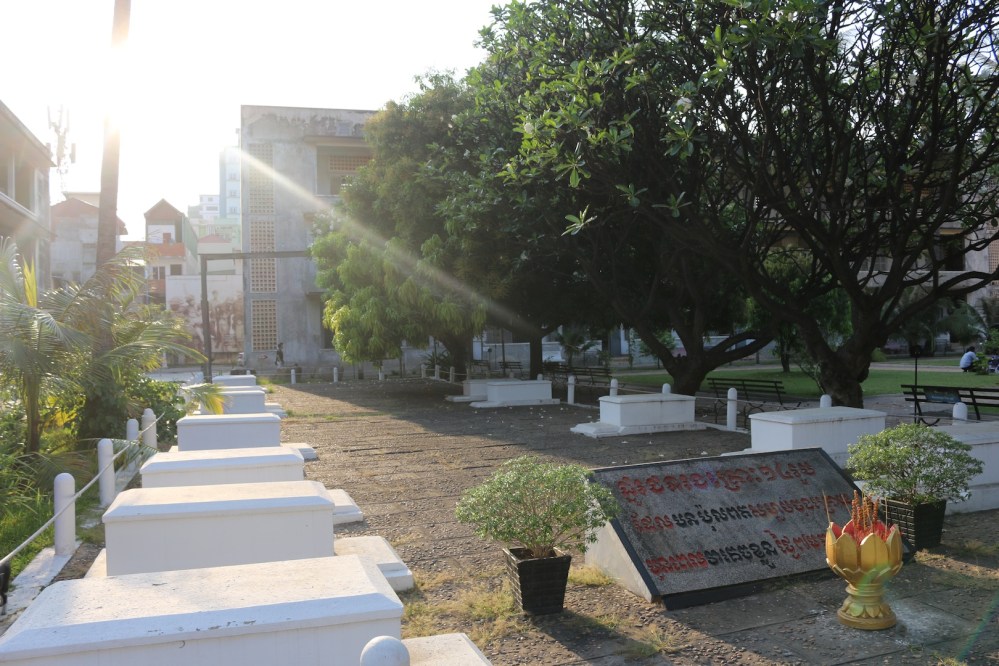

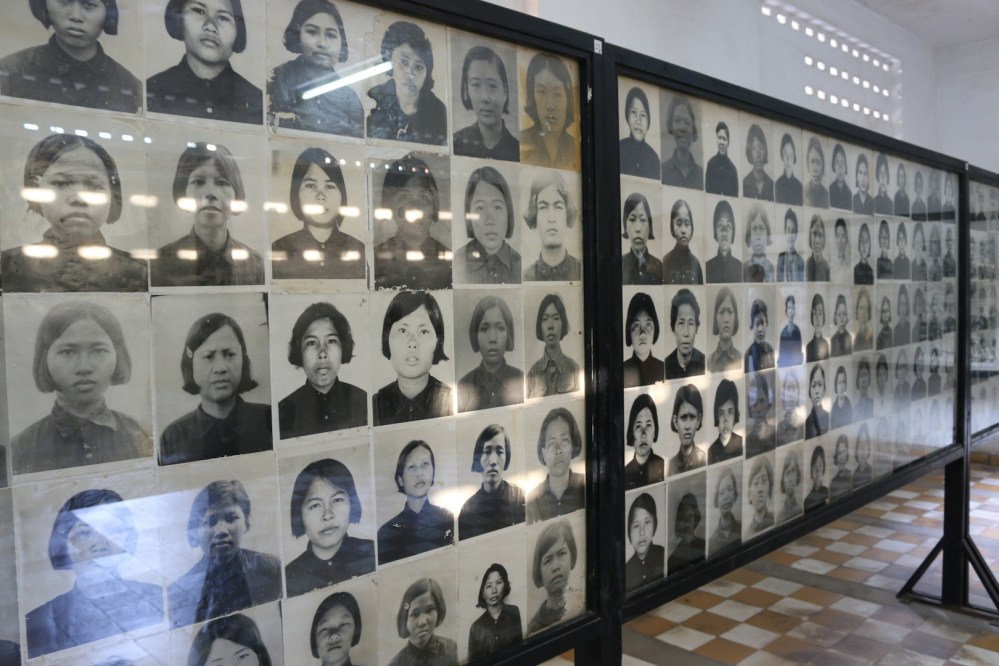
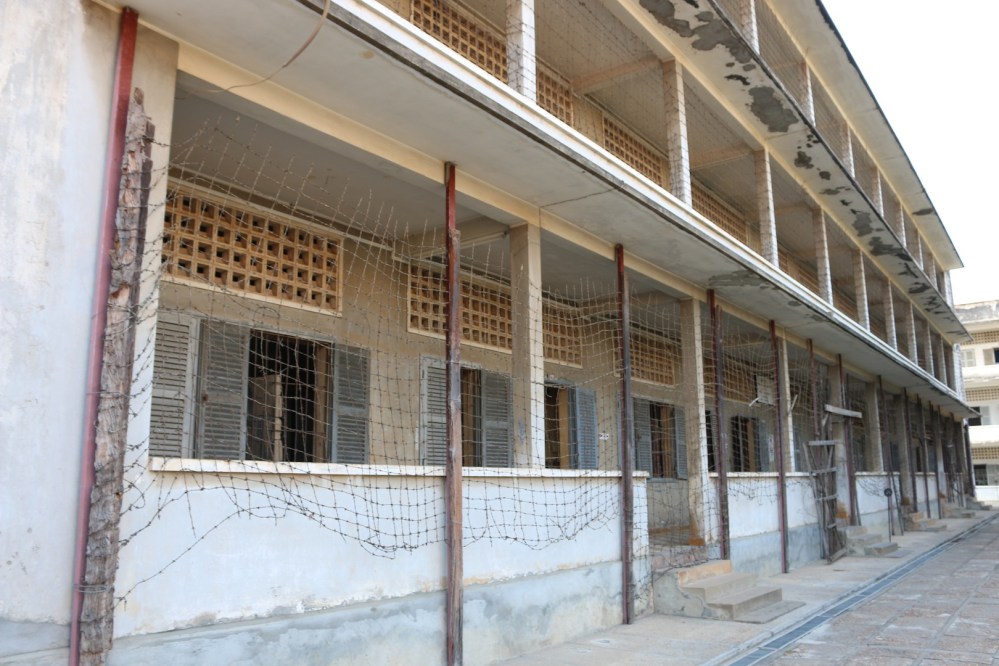

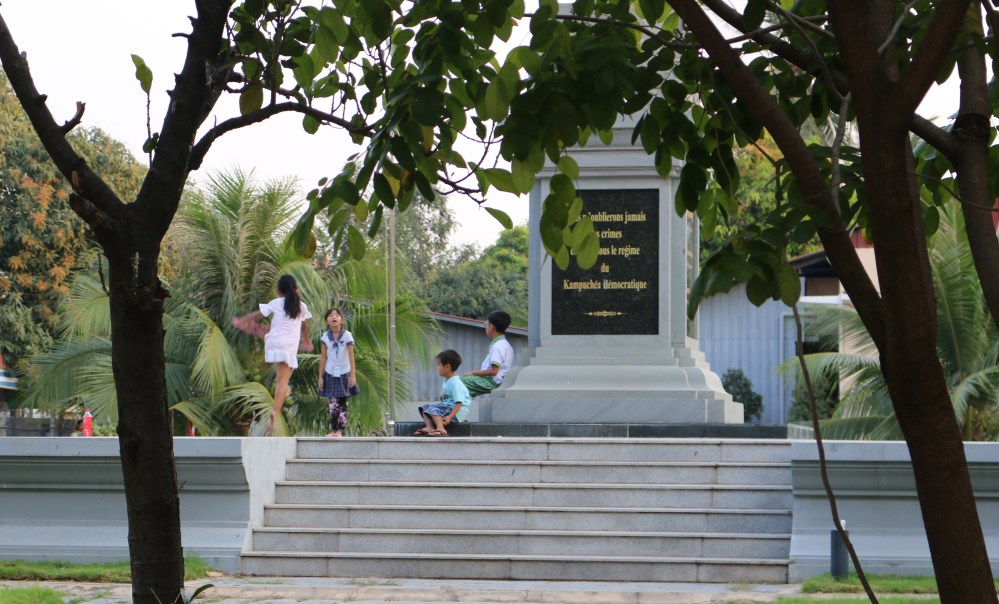
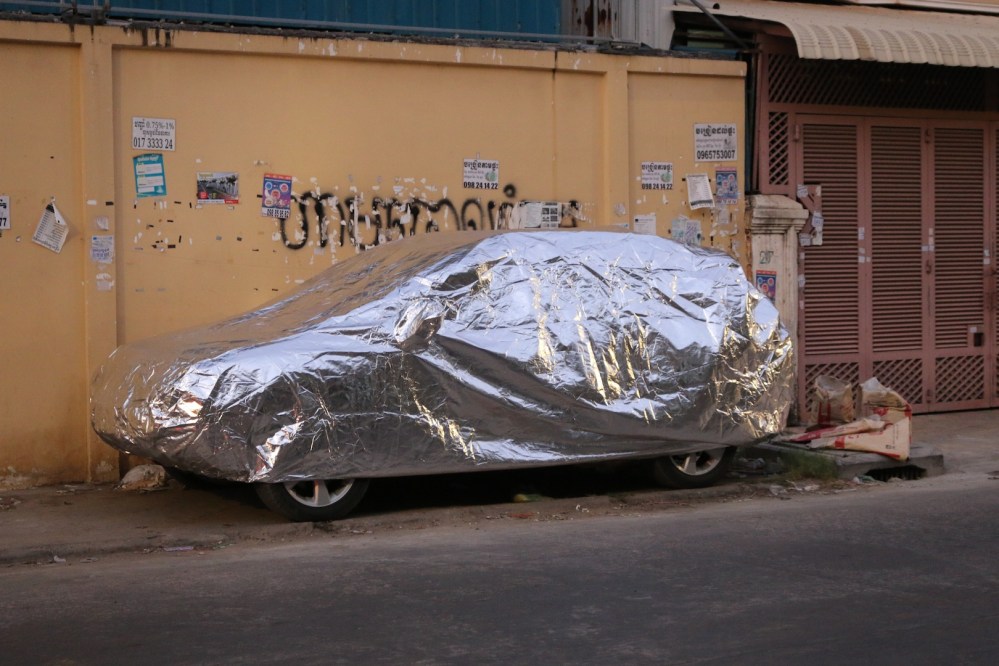
After the museum we went and bought a Cambodian SIM card, so we could stay connected, we walked down a boutique street (which wasn’t a lot of anything) and had some dinner at a lovely cafe. After 3 very packed days we were ready to go to bed! Also we saw a car that looked like a jacket potato.
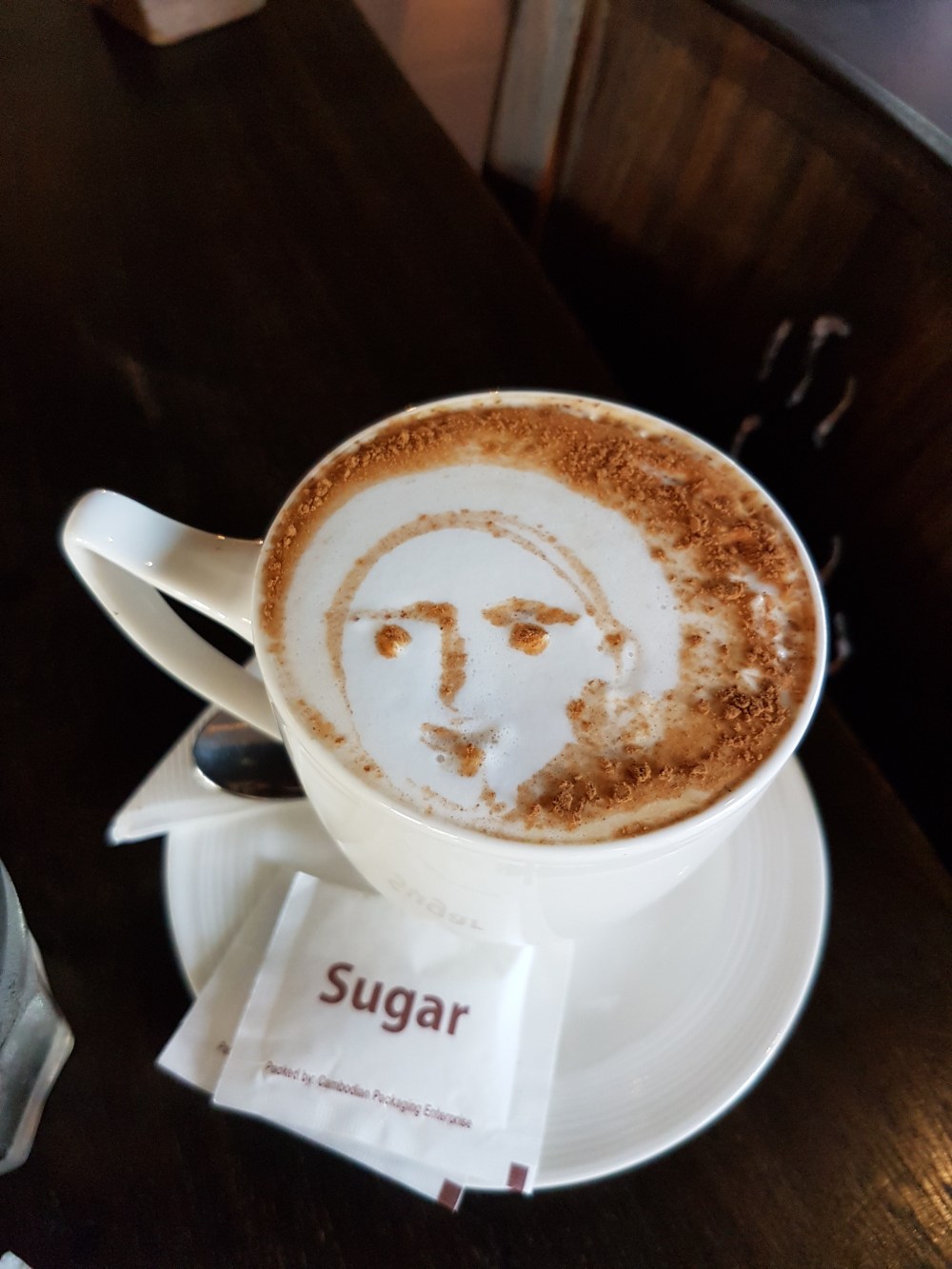
The next morning we got up and ate a bagel at the same cafe that we had dinner at. I won’t say it was a ‘normal’ bagel, but it was good. My coffee had a smiley face, so that made me happy.
Annushka and Christina picked us up in our hired tuk tuk for the day and we headed off to another sad spot, Choeung Ek more commonly known as the Killing fields. Upsettingly Choeung Ek wasn’t the only killing field in Cambodia during the Khmer Rogue regime. There were 300. Prisoners of the S21 prison were brought to the Killing fields and murdered. They were then buried in mass graves. It is believed that 17000 people were murdered at this one site. Of those 17000, there was one grave specifically for women and children and one grave for Khmer Rogue soldiers who had betrayed the regime. These soldiers were buried headless. We hired an audio guide here and spent 2 hours walking around, absorbing the place and listening to the horrific stories.
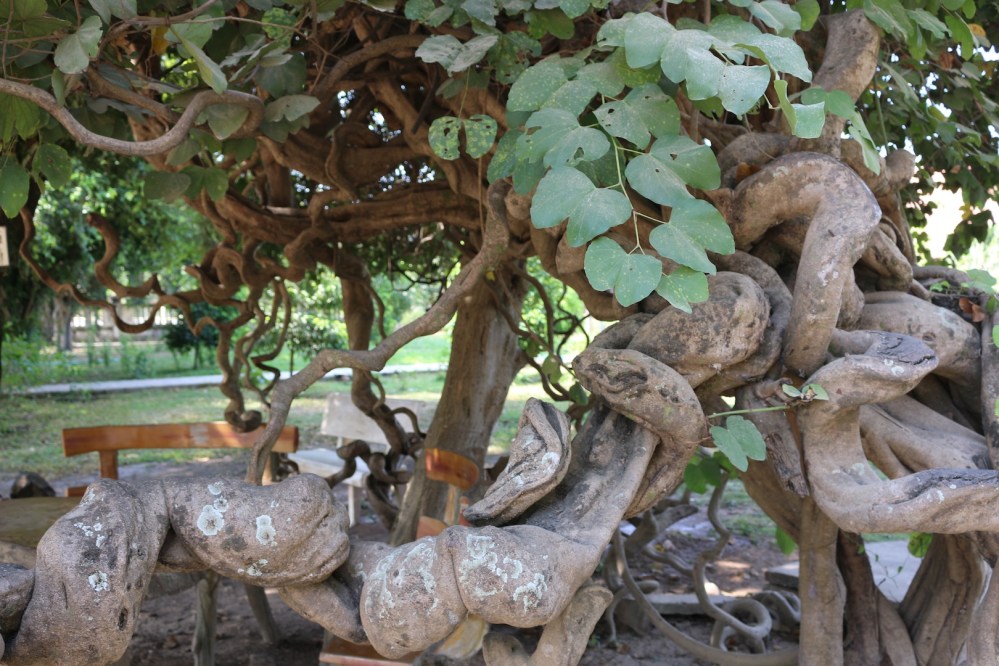
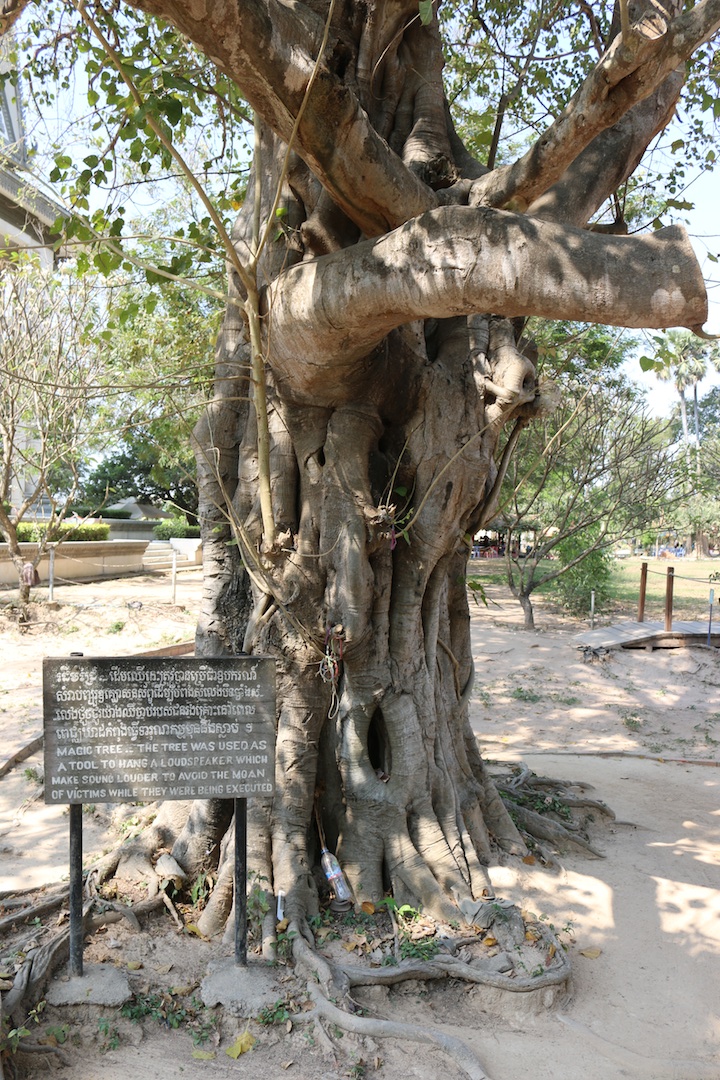
The branches on this tree are serrated and were used as weapons against the prisoners. 
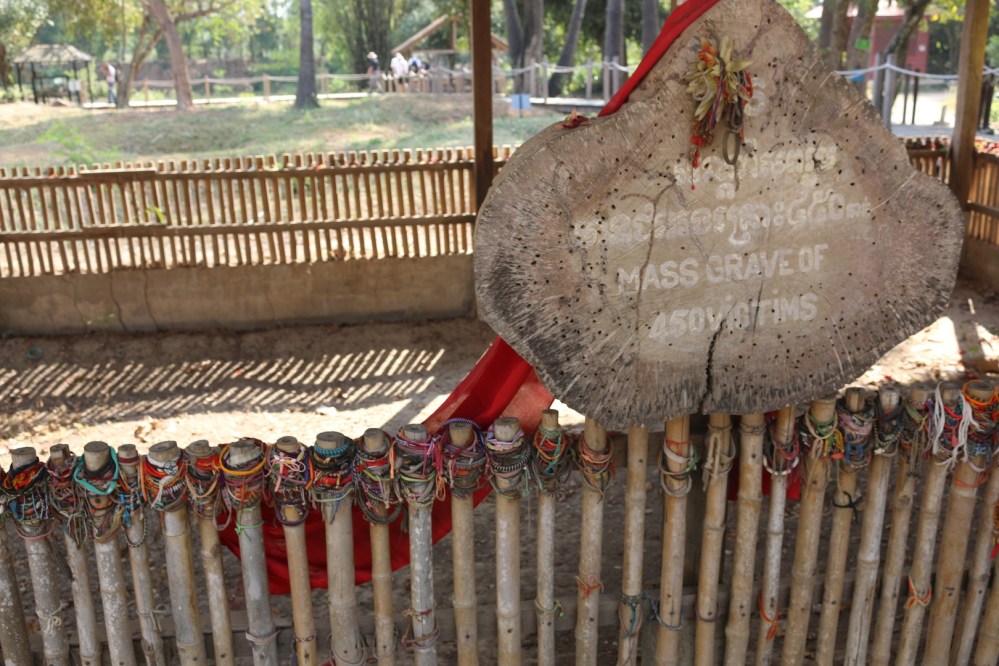

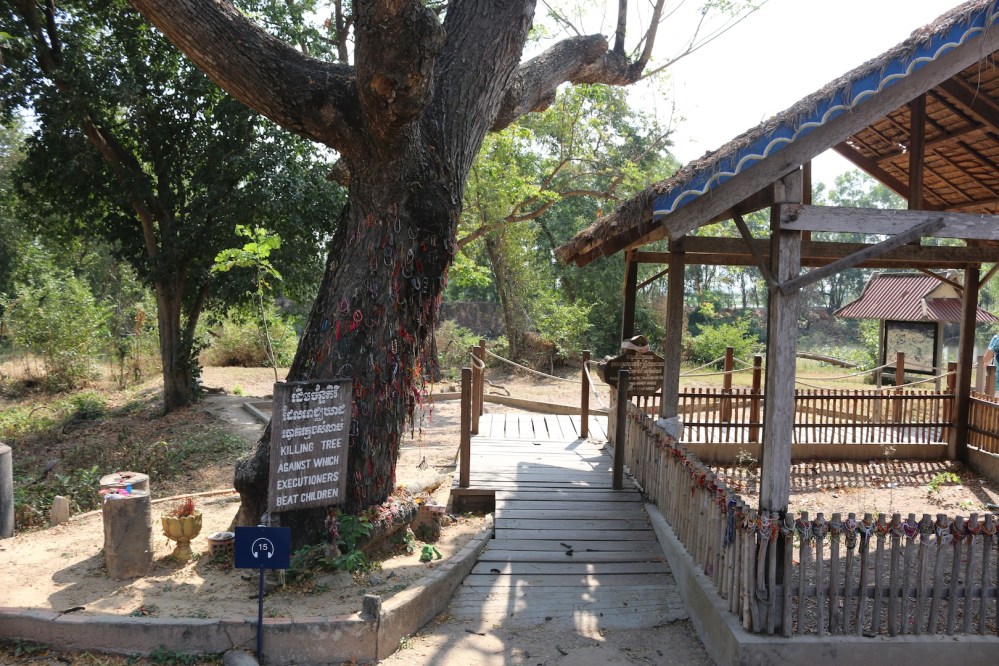
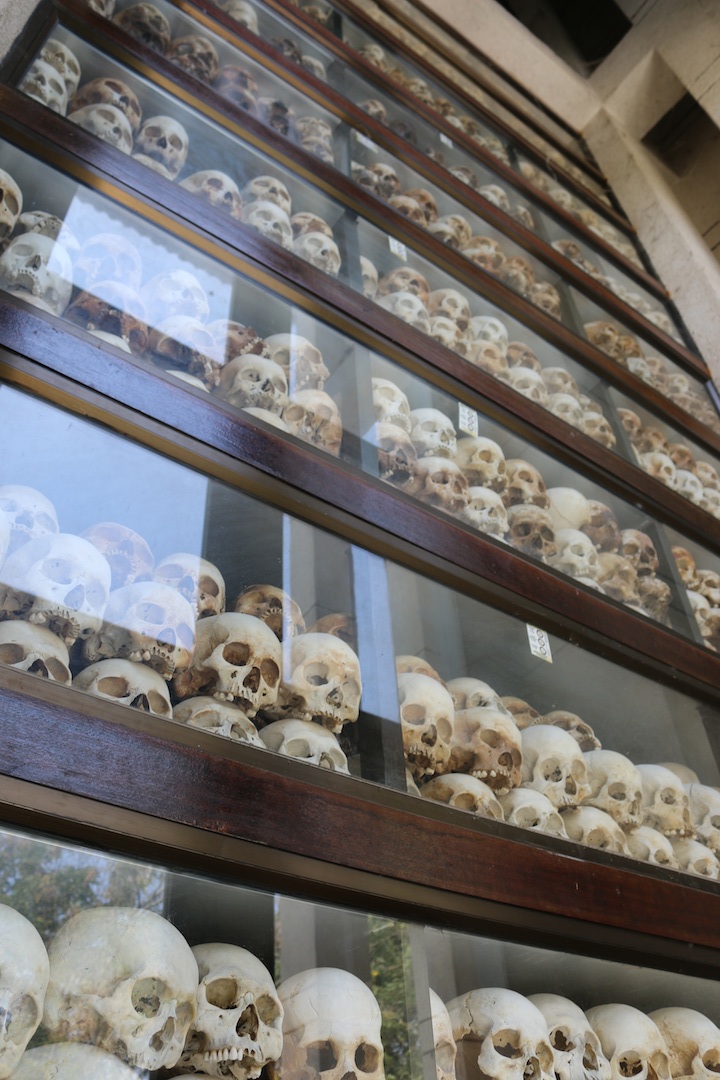
Some very difficult parts included seeing the Killing Tree, which is where children and babies were beaten to death against the trunk of the tree. Also seeing bone fragments and clothing fragments protruding from the ground was difficult to see. Every few months these fragments are collected and preserved with some dignity. In the middle of the park is a memorial. At this memorial the skulls of some of the victims, along with some other major bones, have been laid to rest in a place where people can pay their respects.
A memorial under the killing tree. See the clothing that has risen from the graves with the monsoons.

Collected bone fragments.
A bone fragment we saw exposed as we walked around. 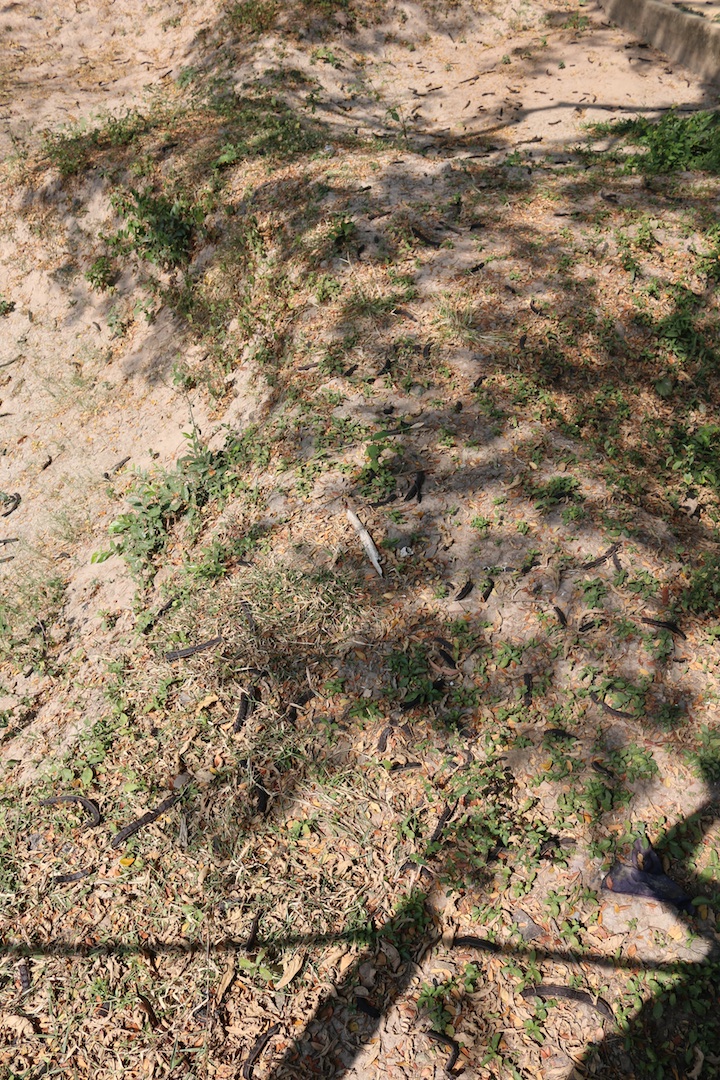



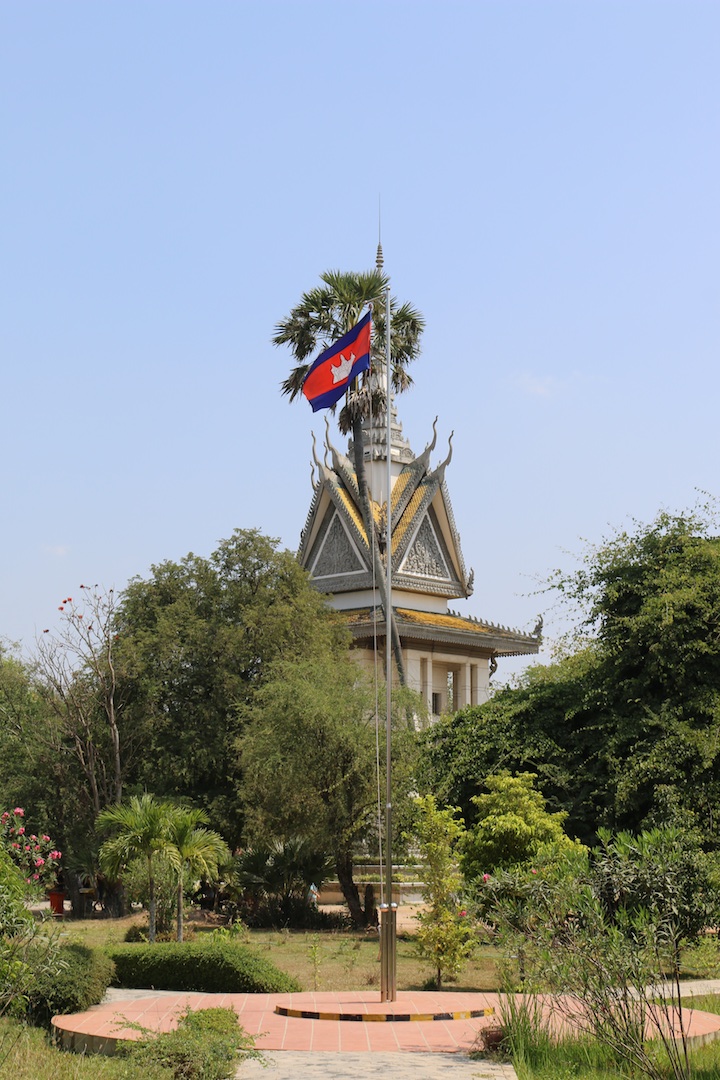
Our visit to the killing fields was very sombre and it truly showed us how nasty some of mankind can be towards each other. Unfortunately, the audio guide was right in saying that this is not the only time that mass genocide has happened like this and more than likely, it won’t be the last.
We headed back towards Phnom Penh and stopped for an hour or so to walk around the Russian Market. Why it’s called the Russian Market I have no idea. It was a very large market that sold absolutely everything. There were sections for clothes, food, bike parts, jewellery, homeware, crockery, furniture. The list goes on. We didn’t buy anything haha.

After some lunch with Annushka and Christina we visited an organisation called ‘Daughters of Cambodia’. Directly from their website this is, in their own words, what they do.
‘Daughters of Cambodia exists to empower those trapped in the sex industry in Cambodia to walk free and start a new life, with healing, dignity, and the means to prosper. We offer opportunities to those trapped in sex-exploitation and trafficking to be employed in our attractive and innovative social enterprises and to learn how to sustain their new life-styles in non-institutional settings. We offer employment in our 8 fair-trade non-profit businesses, along with recovery programs including social work, counseling, medical treatment and life-skills education.’
We spent some time in the store and I bought a tshirt to support the work that they are doing. There is also another organisation called ‘Sons of Cambodia’ which are supporting transgender and transexual people who are trapped in the sex industry.
This afternoon we visited the Royal Palace. It was very expensive to visit, $10.50 each and to be honest, we learnt nothing. It was so ridiculously hot and humid there because of all the concrete buildings, there were no signs and no option to have an audio guide. We wandered around for a bit and took pictures of the pretty buildings, but I couldn’t tell you what they were.
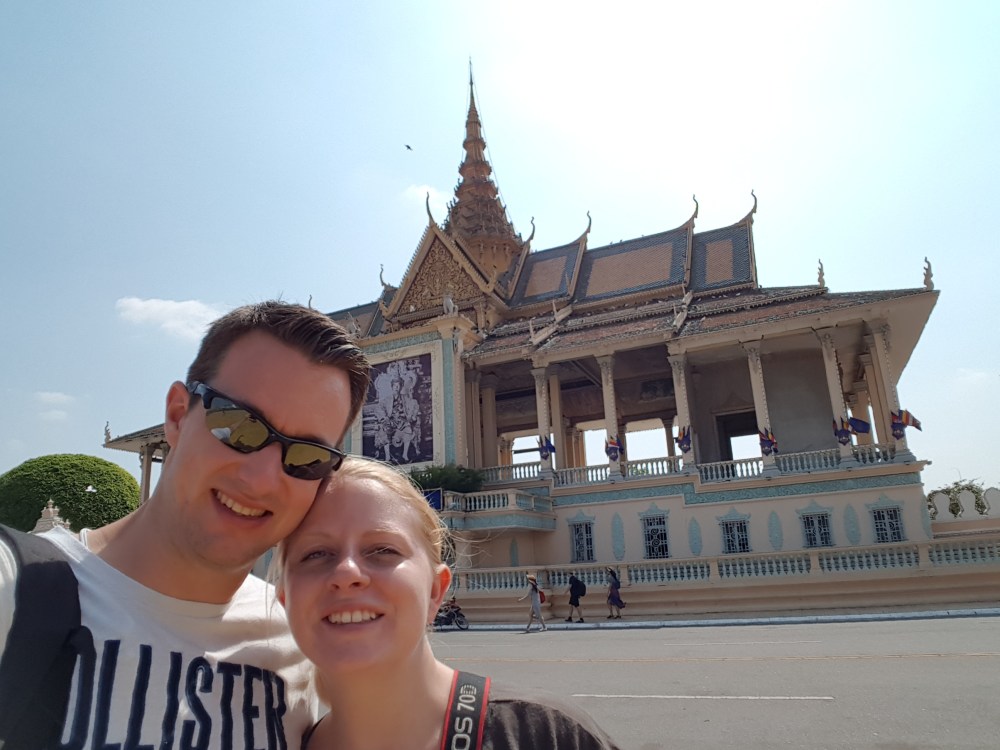

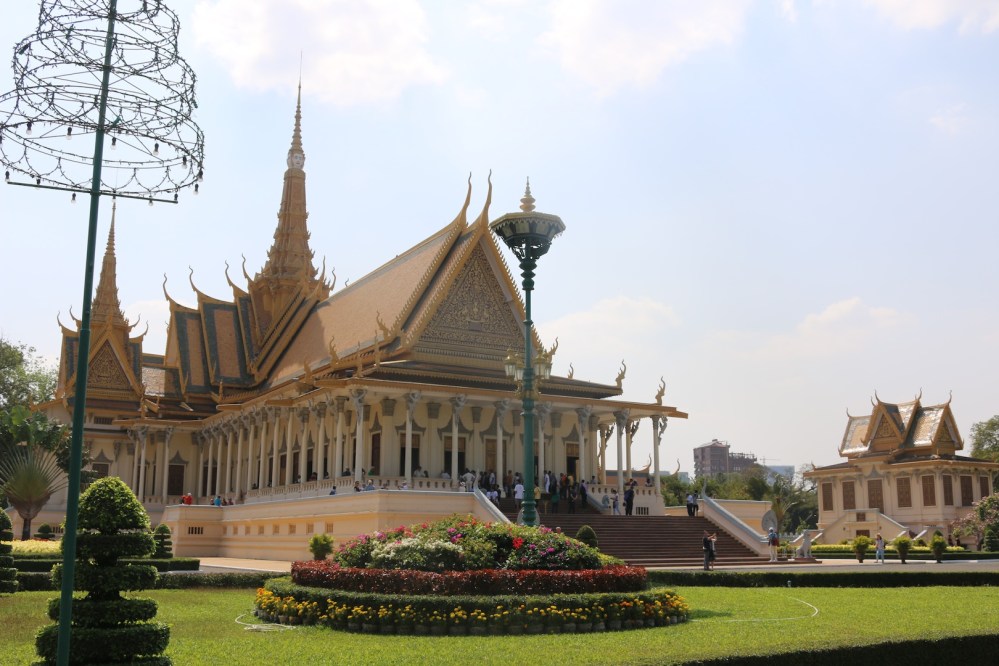
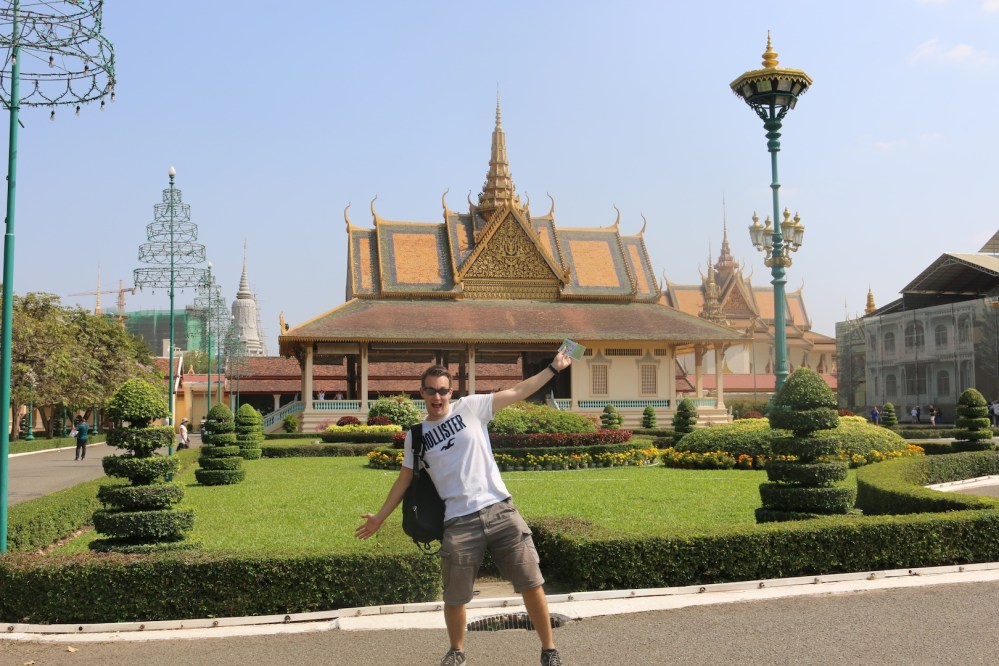
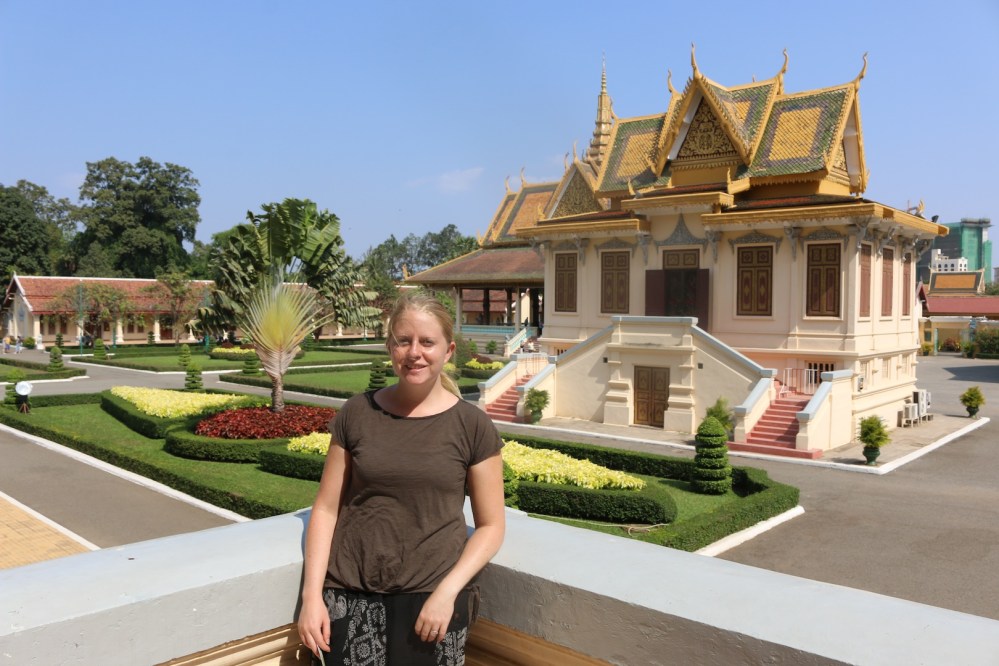
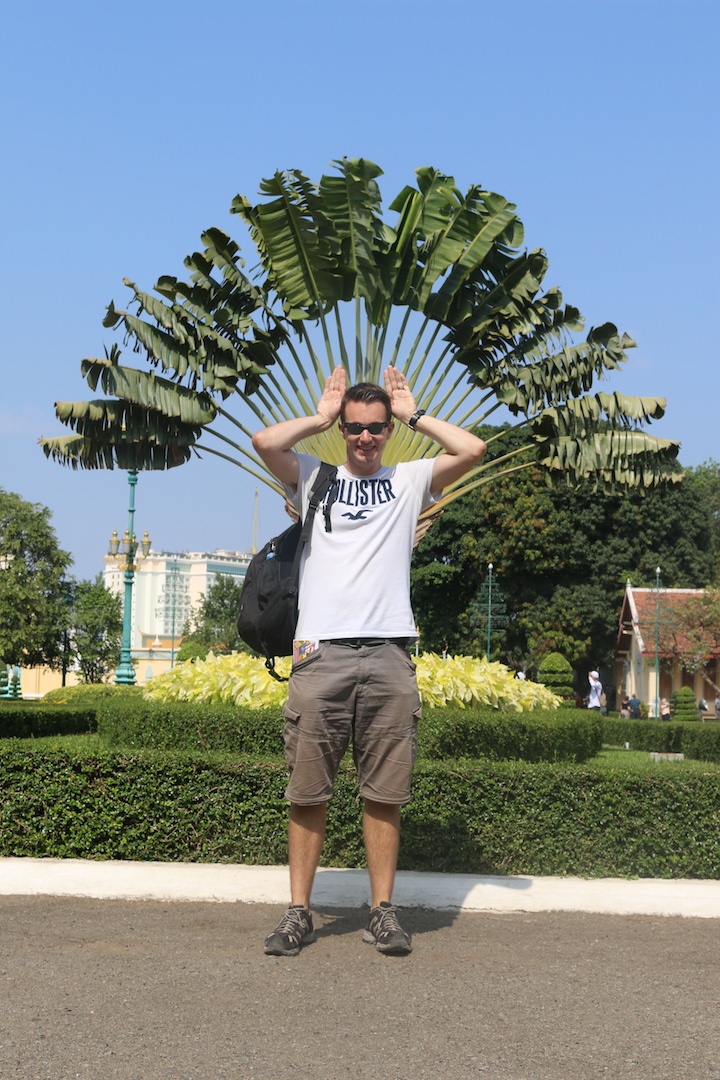

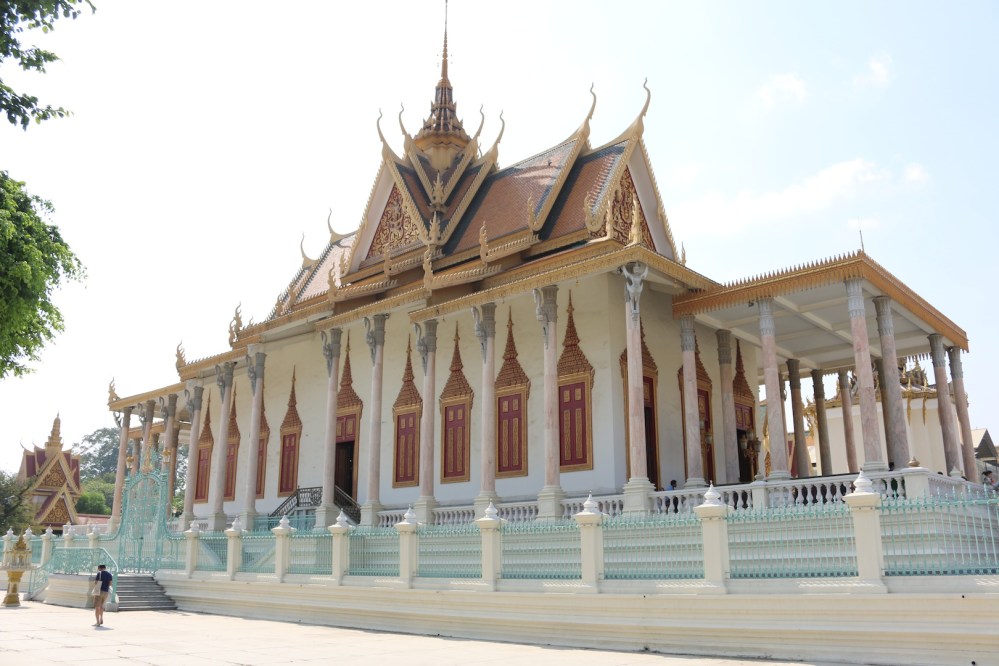

That evening we had a lovely dinner at a restaurant called Sugar Palm with the people we had met on the Mekong tour. It was a lovely way to spend our last evening in Phnom Penh.
In the morning we had a couple of hours to kill before our bus to Kampot. We decided to go and see what the National Museum was like. We decided to walk, which was probably the first problem as it was unbearably hot and humid. By the time we made it there I was so hot and not feeling great to be honest. We wandered around for about an hour or so, but all that was there was a lot of ceramics and statues. Not our cup of tea. The building itself was really pretty though.


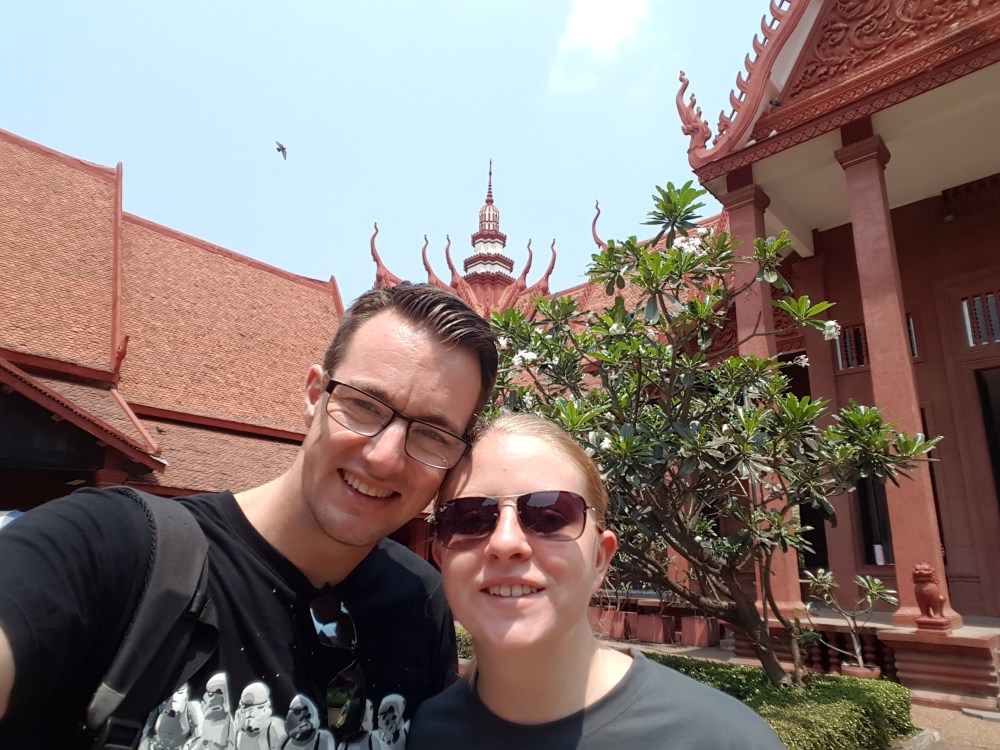

Next stop… Kampot!
 Simon and Becky's travels
very interesting and sad at same time!
LikeLike