As part of our Middle Earth Trilogy package we would be heading off to see 2 caves, Waitomo and Ruakuri Caves on the hunt for Glow worms. We had heard that Waitomo was a little bit commercialised and slightly disappointing, so were glad that we got to see another cave during the tour too. We only spent 45 minutes in Waitomo and were unable to take any photos during our time in there. I do agree with this as the glow worms are used to the dark and therefore the likelihood is that people would use their flash, disturb them and then they would die. We were guided around the cave, saw lots of stalagmites and stalactites, as well as columns and pillars when the stalagmites and stalactites have joined together.
We were told about the lifecycle of the glow worm. There are 4 stages: egg, larvae, pupa and adult fly. The whole process only takes about 9 months, with the glow worm only living as an adult fly for 3 days. They are very poorly formed and do not have any mouth parts as an adult, so they reproduce and then die of starvation. Charming! The stage we were seeing them as was the larvae, which they stay in for usually around 6 months. The light in the glow worm is used to attract prey and is a form of bioluminescence, with the light being given off as a biproduct of the enzyme reactions during digestion.
After we walked around the cave and saw an impressive area called the Cathedral, which has EXCELLENT acoustics apparently (they have a Christmas concert in there and Katy Perry has sung in there). Unfortunately, none on our tour was brave enough to have a sing. We could hear a waterfall whilst in the cave, which sounded VERY impressive. Turns out it is only a 1m drop (Simon got this right), but sounds much more impressive because of the acoustics.
We were lead into a very dark area and this is where we got our first sighting of the glow worms. Their white/blue lights twinkle like stars on the cave wall and you can see their feeding ‘strings’ hanging down from the animal to catch food. They only need to feed every 3 days or so whilst in this stage. From here we went in a boat and were taken through the most impressive part of the tour. We were pulled through a large cave absolutely covered in THOUSANDS of glow worms. Very magical and not something we will both forget any time soon. The boat excited the cave where the first explorers entered the cave onto the Waitomo River and our tour was over. As I said before, this tour was only 45 minutes and you could tell that it was so popular that they couldn’t afford to give anymore time to the tour, but we did enjoy it.
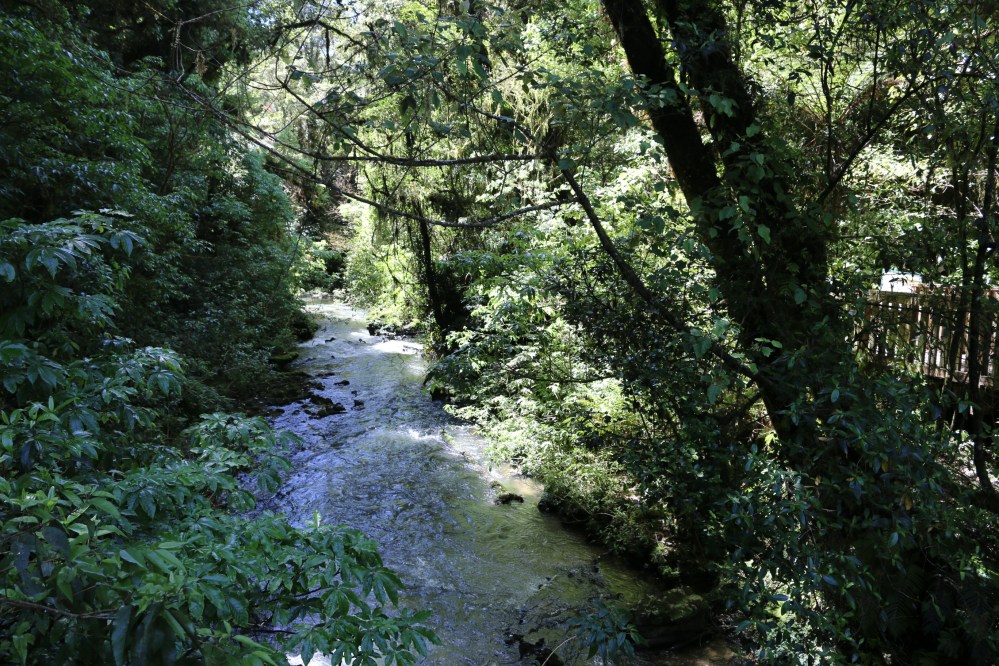
We had about 90 minutes until we were meeting for our 2 hour tour around Ruakuri Cave so we parked up where we would be meeting them and were hoping we could go for a walk along the Waitomo River and then have some lunch. Our of the Department of Conservation workers who was trimming the grass told us about a figure of 8 bush walk that would take us past the river so we decided to do that while we waited. This was the BEST decision ever. The walk took us through the Ruakuri Natural Bridge, through forested gorge and through narrow limestone bluffs and outcrops. There was a viewpoint in the natural tunnel which was pretty dark, but totally worth the walk and also a viewpoint of the natural tunnel from up high. We were so impressed by the walk. I’ll let the pictures show you why.




Our guide was about 15 minutes late for our Ruakuri Cave tour, so late in fact that I rang up to check where they were. We learnt about the name of the cave which means 2 dogs in Maori. Apparently the 2 explorers who discovered the cave had to kill 2 wild polynesian dogs to be able to get access to the cave so they named the cave in their honour. The cave is a very spiritual place for the Maori and a lot of historic Maori people have been buried in the original entrance to the cave, so we were going to enter through a manmade entrance. This was very impressive in itself and actually provides full wheelchair access. The cave was very dark initially, but our eyes started to adjust to the light so enough.

Around every corner was something cool. We saw more stalactites and stalagmites, as well as elephant ear formations, rock popcorn, rock carrots and rock broccoli. Hopefully the photos show why these names are suitable. We were allowed to take photos during our time in this cave so took full advantage, even though we couldn’t get a good photo of the glow worms, we did get a good photo of their feeding lines.
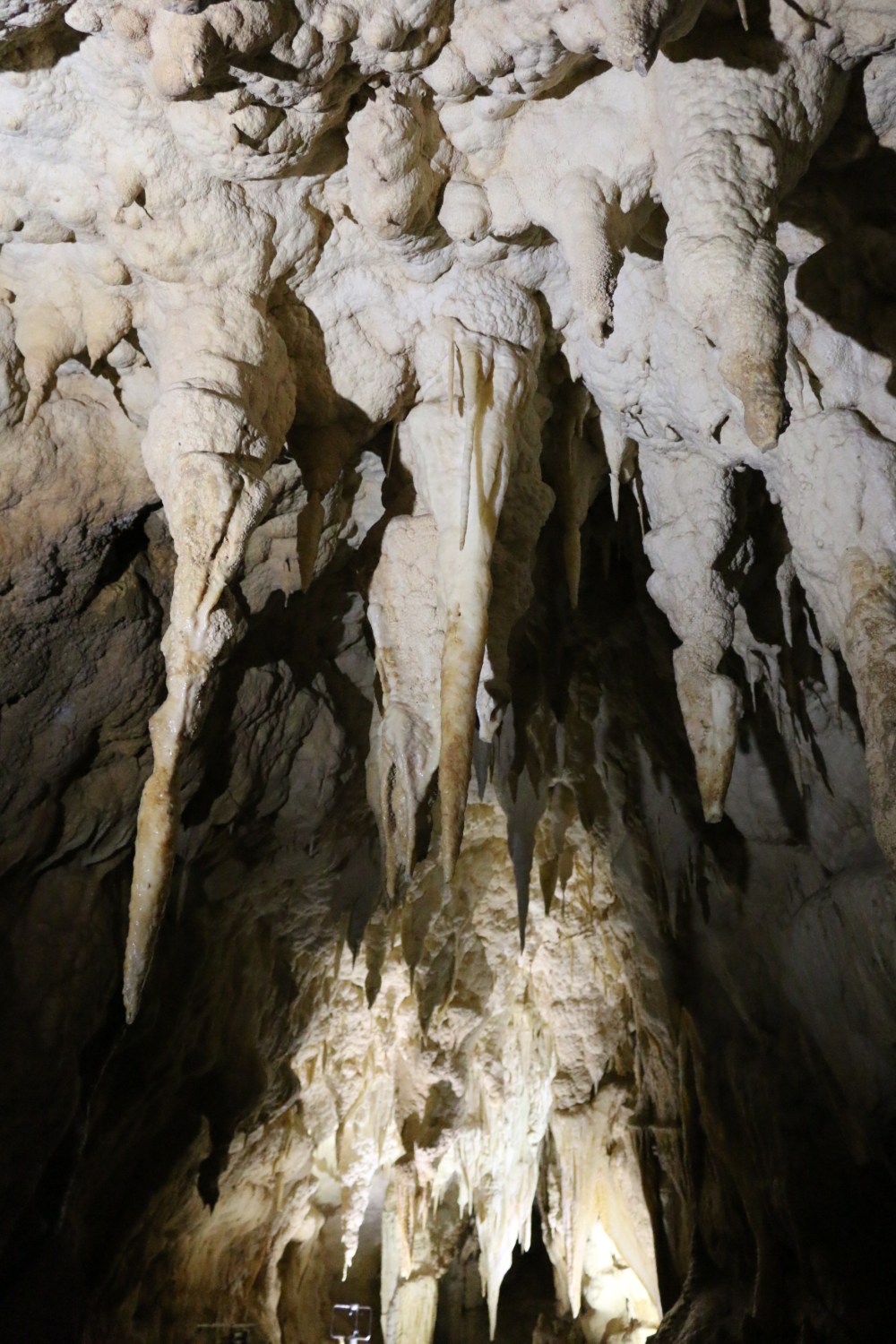


We saw an area called the ‘pretties’. See why it’s called that:
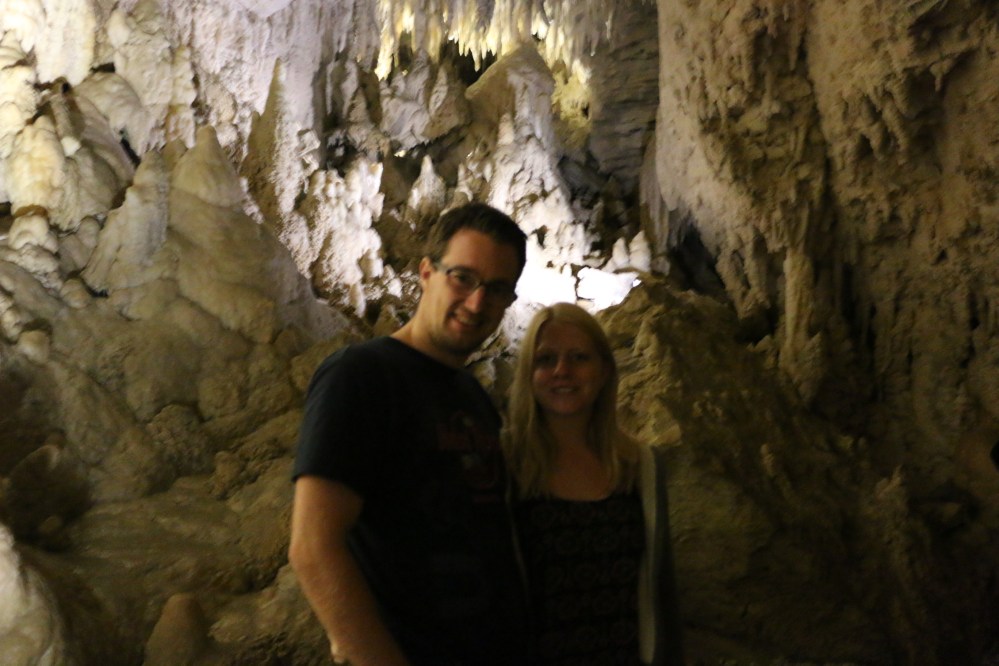
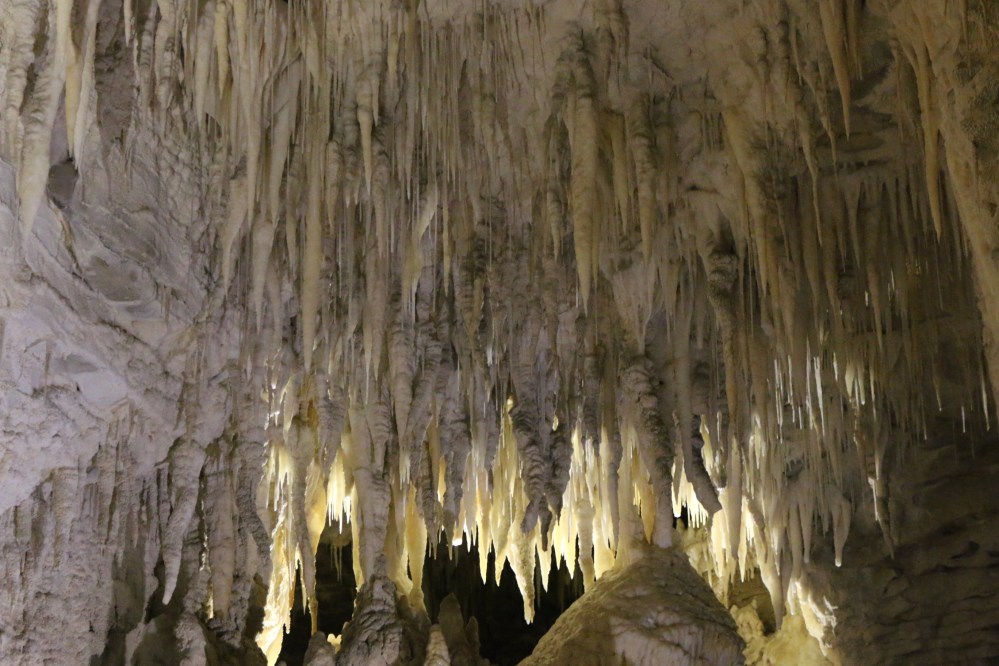
We were shown the pipe that allowed concrete and sand to enter the cave for construction of the paths inside the cave and also some fossils of shellfish.

The glow worms in this cave were not present in the same numbers as the Waitomo Cave, but we still got to see them and also we weren’t rushed on anywhere near as much as we were previously.
We learnt a lot about the law in New Zealand which is that you own the air and earth above and below you land, which means any cave is owned by the land owner and not the government. Apparently this caused some problems a while back as there was a law suite about air space.
The tour ended up only being about 1h45, but that was ok as we had really enjoyed it. We were glad we had taken the time to see another cave and not just gone for the touristy option of Waitomo. After our time in the caves we drove to Rotorua where we knew it would be smelly. I’ll keep that blog post separate.
 Simon and Becky's travels
Lovely – glad you saw that other cave – I thought the first one was too touristie ourselves(but that was the only one we saw on our trip).xx
LikeLike