After our lunch in Wanaka we started our long drive down to Te Anau. We passed through Queenstown on our way and along the Eastern coast of Lake Wakatipu past the Remarkables. It was amazing to have a taster of what was to come during our time in Queenstown. The weather was a little bit unpredictable so we didn’t stop too many times to take photos, but enjoyed seeing the new snow on the tops of the mountain peaks on the way.
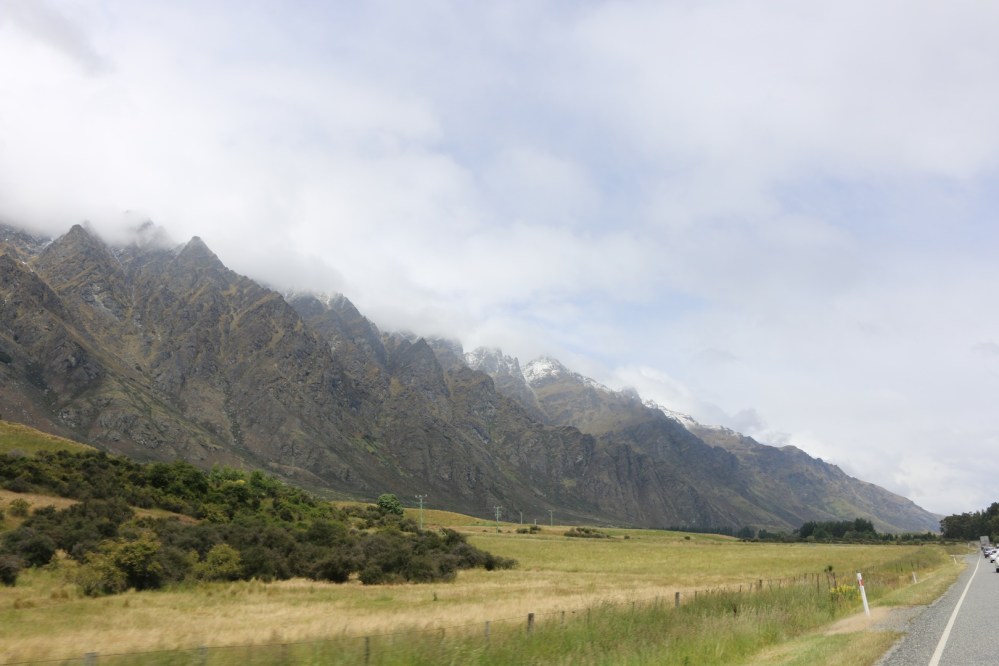
We made it to Te Anau with just enough time to cook for the evening, but that was ok as we were really only there for one reason, Milford Sound. Our tour was picking us up in the morning and taking us through beautiful Fiordland, making many stops on the way, before we would eventually reach Milford Sound.
Our tour guide Reece, from the company Southern Discoveries, was amazing from the start. Apparently, he had been asking every couple who got on board if they were the couple on Honeymoon. He was really happy when he finally found us. I had been putting on most of our bookings that we were on honeymoon, but this was the first time that it was acknowledged. He gave us a congratulatory postcard from the company and a box of chocolates which we thought was super kind of them.
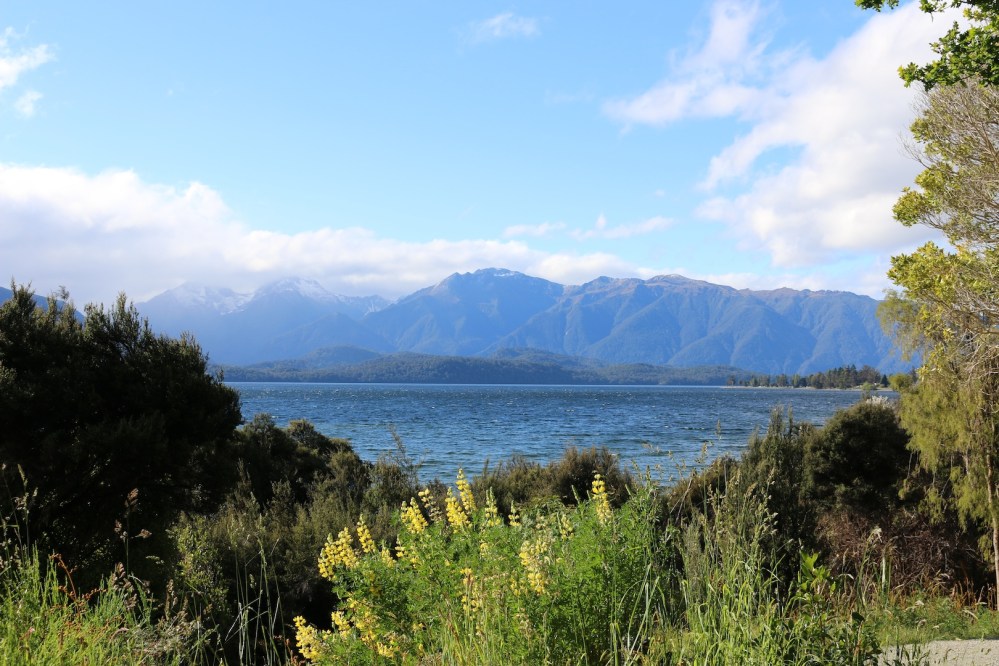
Throughout the whole trip, Reece told us really interesting facts about the area and its history. We learnt that Lake Te Anau is the second largest lake in New Zealand after Lake Taupo on the North island. He told us about the local farming that takes place, as well as all about the Fiordland National Park, how the road was built, what happens during snow storms and about the Manuka tree etc. Our first few stops were to look at the beautiful scenery and we were blessed with an amazing rainbow over looking the mountains. You can tell why this area was used a lot for the scenic shots of Lord of the Rings. It’s just stunning.


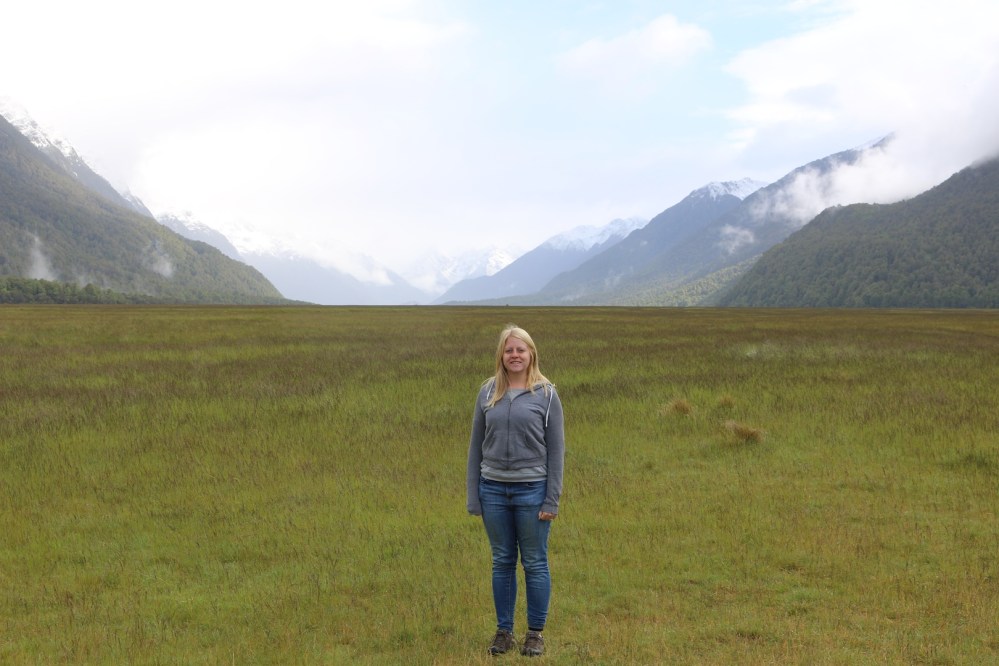

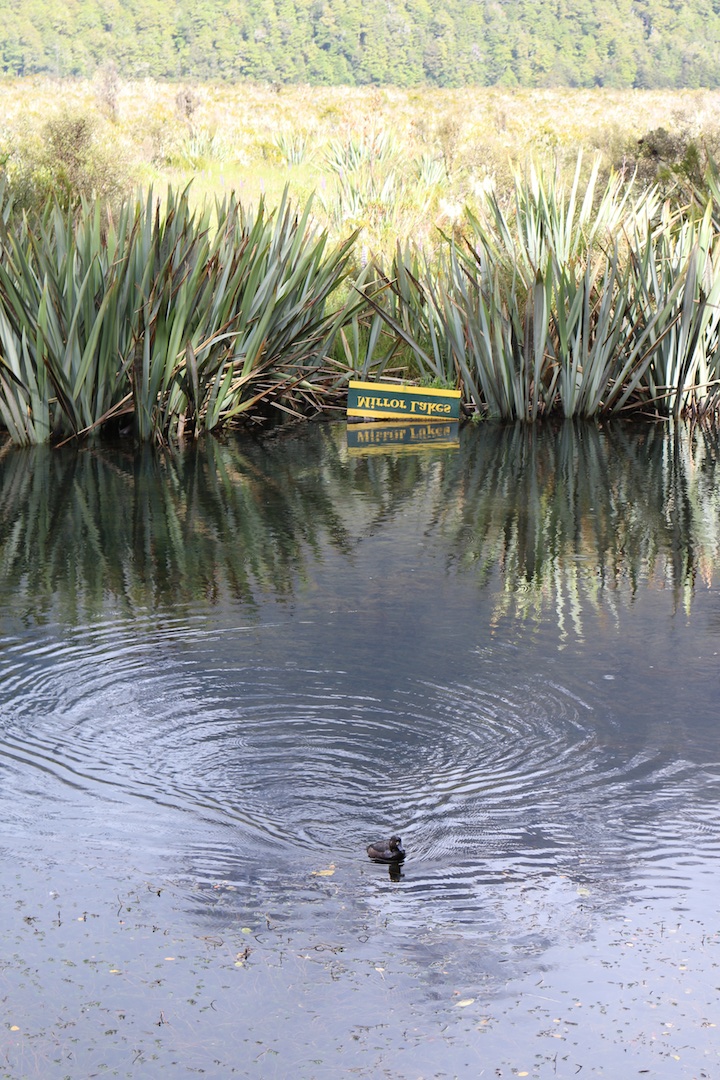
We carried along the road and eventually made it to Mirror Lake. This is another spot that claims to produce perfect mirror images of the mountains into the water on a calm day. We had a little bit of disturbance, but as the sign reflection shows. It wasn’t bad at all.

Soon after Mirror Lake we reached the 45 degree mark which meant we were exactly half way between the equator and the South pole. After this we hit the great divide which is where the rivers start flowing towards the Tasman Sea instead of the Southern Ocean and the Pacific. At this point, the weather gets considerably worse very quickly. Milford Sound is the wettest place in New Zealand, with Franz Josef being the second. Throughout the rest of the trip we experienced exactly what being the wettest place in New Zealand means.
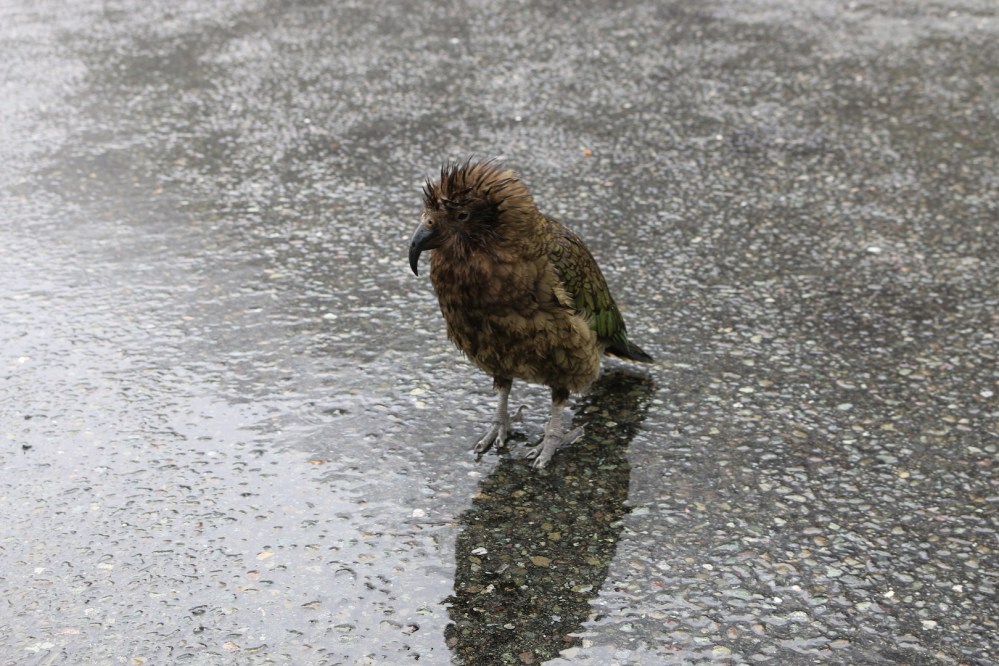
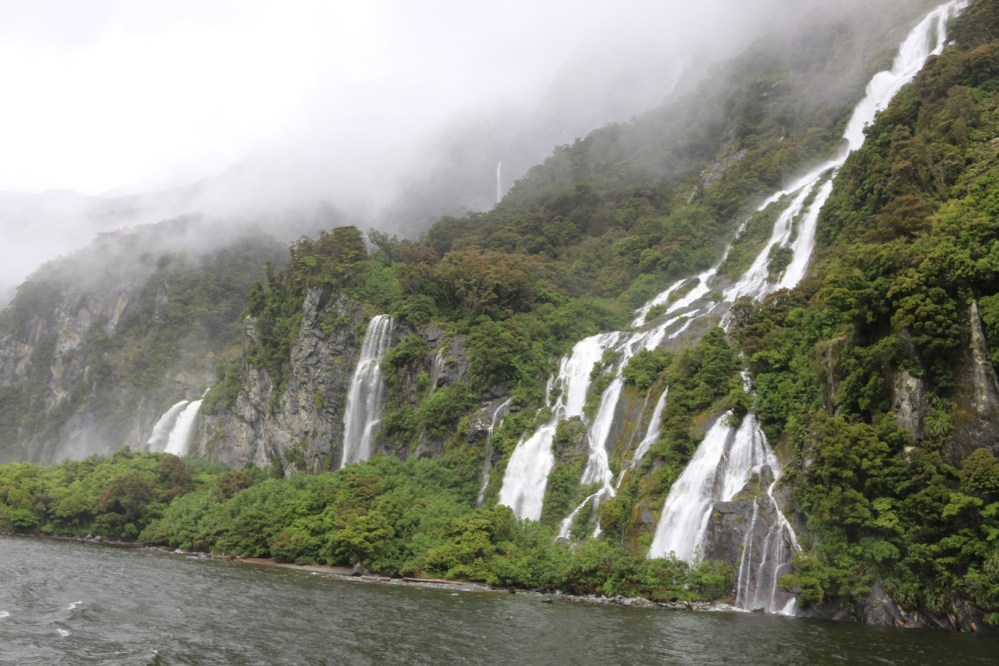
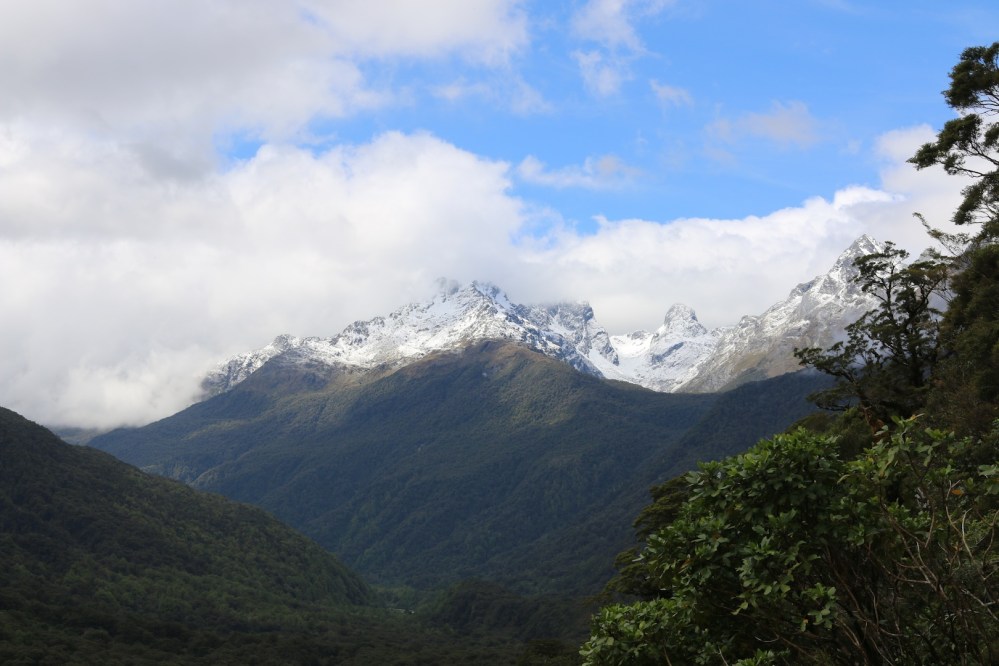
We made a few more stops on our way to see the beautiful scenery and eventually we made it to the summit of the road. At the summit there was snow very nearly down to the ground and we learnt that the day previously there had been a snow warning, meaning all drivers on the road had to carry snow chains and prove they could put them on their cars if they needed to. Luckily, this warning had been lifted and we were able to just admire the snow. There were a lot of greedy Kea birds around. As soon as we stepped off the bus they would be walking around your feet begging for food. We eventually passed through a tunnel, which was really cool in itself and emerged the other side to mountains with endless waterfalls flowing down them. This is the good thing about Milford Sound, no matter what the weather, the views will be breathtaking. A few hours after the rain stops these waterfalls dry up and disappear without a trace. Luckily, i think, for us the rain was still coming pretty strong at this point.



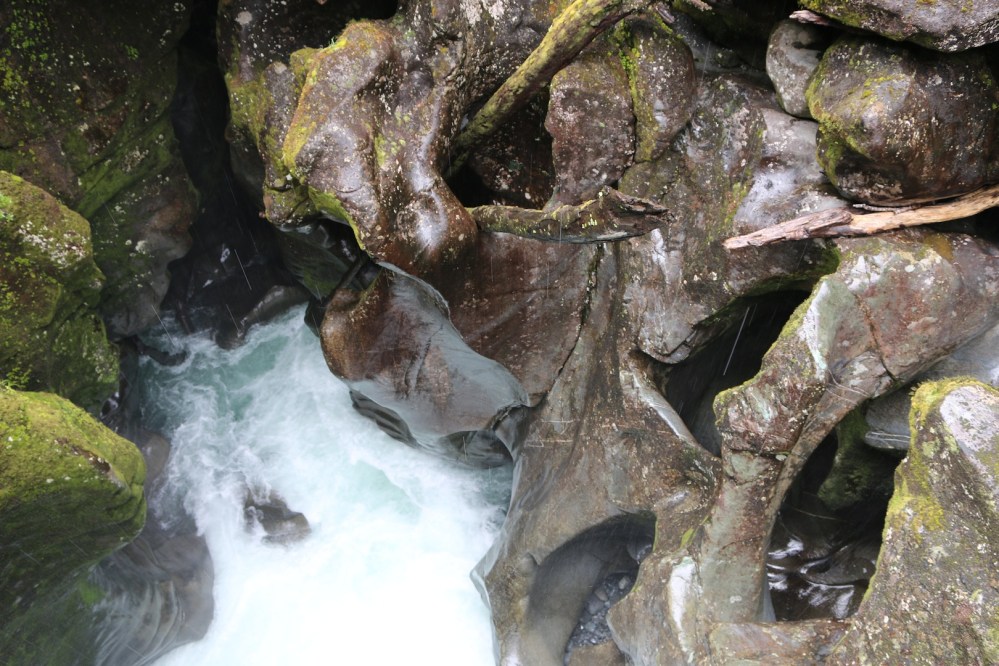
Our last stop before Milford Sound was the Chasm. The Chasm was a short walk from the carpark through lush forest. You could hear the Chasm before you could see it. Effectively, the Chasm is exactly what its name suggests, a large hole with a huge amount of water flowing through it very quickly. The photos we took do not do the Chasm justice, but it allowed us to fully appreciate the power of water.

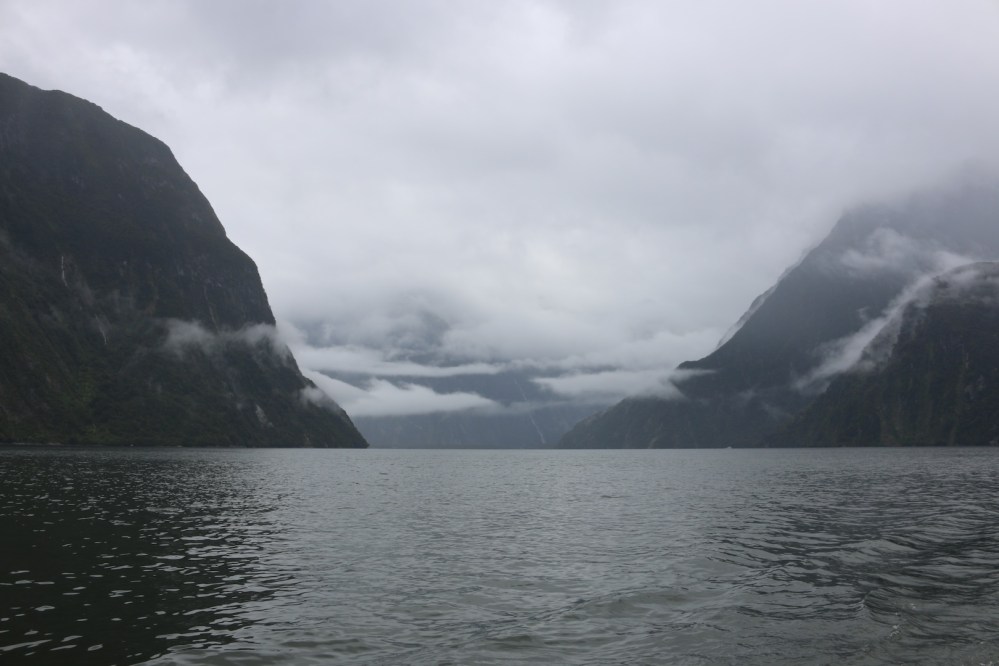
Back on the bus we made our final journey towards Milford Sound. Here we would have about 10 minutes before we would be boarding our boat for our 3 hour journey through the fiord. Milford Sound was incorrectly called a Sound, but the name has stuck. In fact, it’s a fiord because the valley was carved out by a glacier.
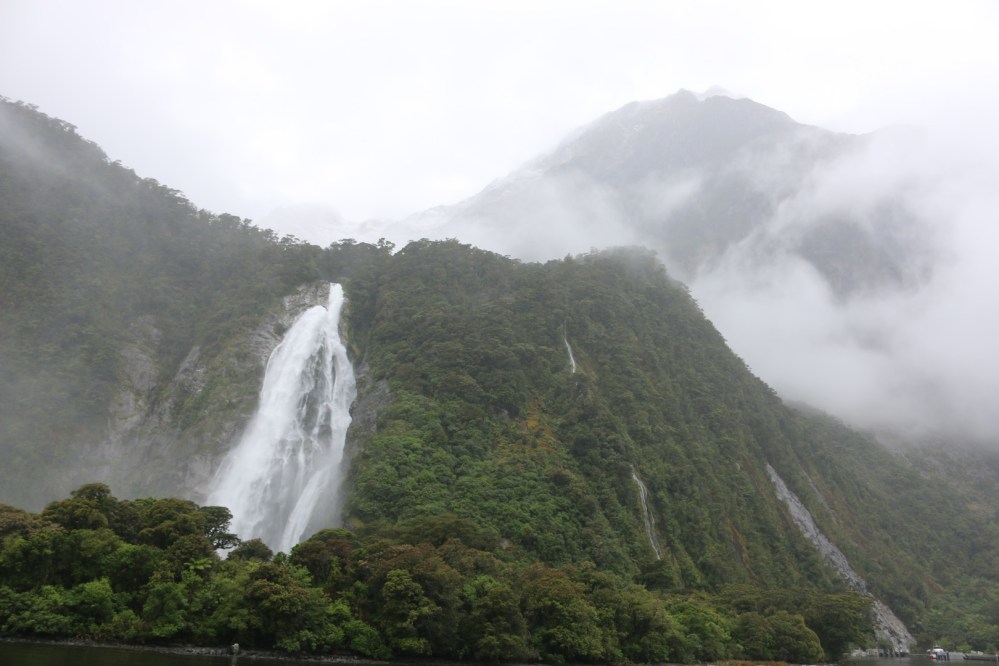
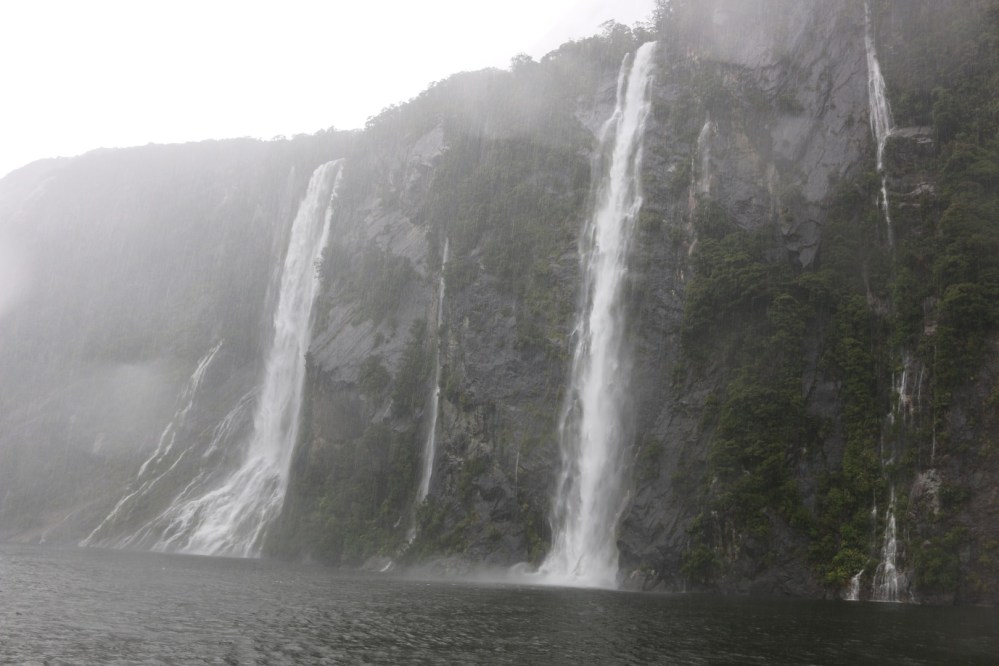
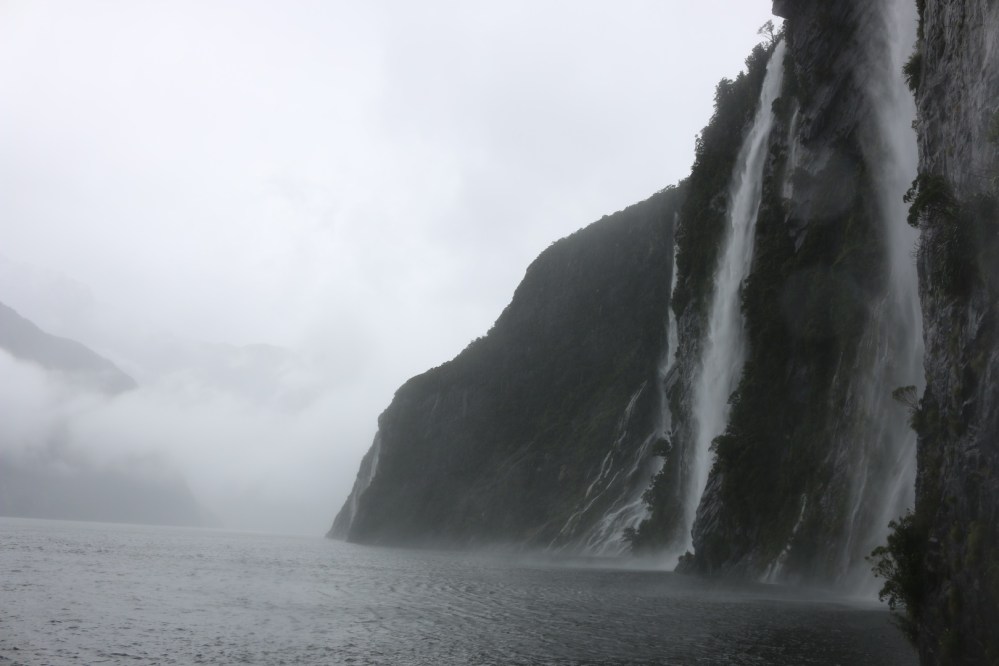
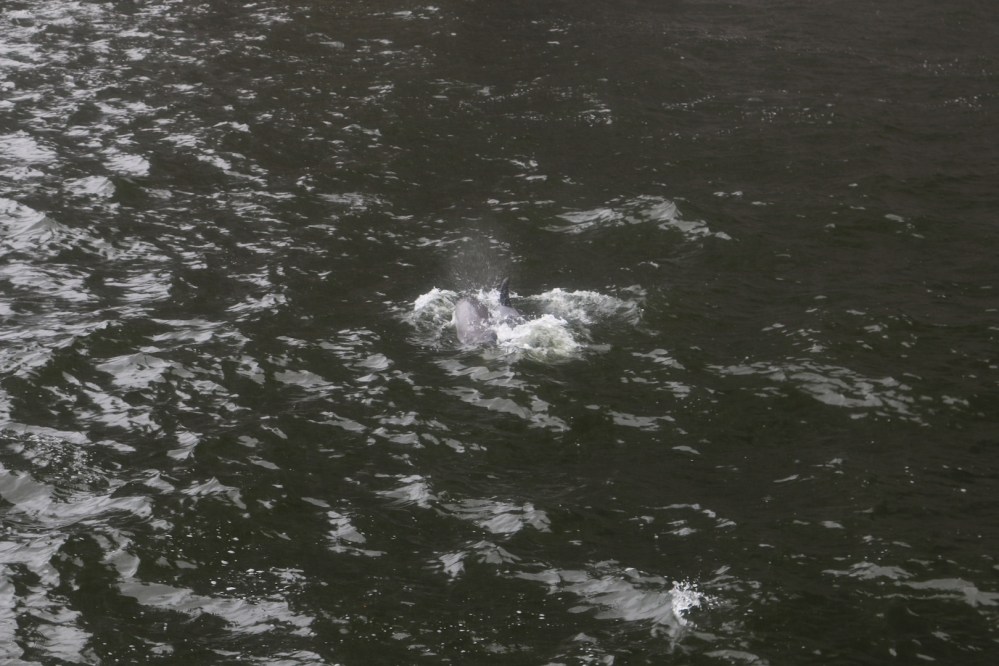
We enjoyed a picnic lunch on board and even though we were getting absolutely soaked, we decided to stay outside for the journey so we could fully appreciate the scale of the place. Most of our initial photos look black and white because the weather was so bad, but as you can see, this didn’t stop the views from being impressive. At one point the skipper took the boat underneath a thundering waterfall. We got absolutely soaked and were giggling uncontrollably until we realised just how cold and wet we were. Having spoken to my Mum that night we realised that it had actually been colder in Milford Sound that day than in the UK.
We made it all the way through the fiord and out to the Tasman Sea where the ride got A LOT choppier. Luckily, we didn’t stay out here too long and we headed back in along the other side of the fiord. We saw so many beautiful waterfalls, enormous cliffs and interesting rock formations. It truly is a magical place and if you come, you have to go. We were in two minds about wether to go to Doubtful Sound instead just because it is far less commercialised, but we’re really glad we went with Milford. Doubtful will be on our list next time.


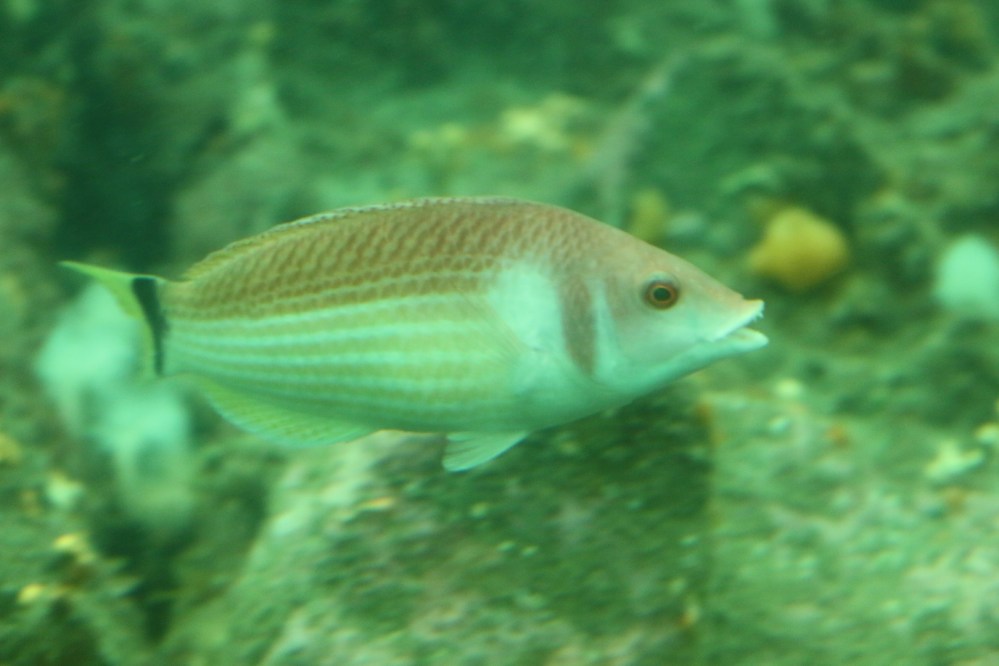
On the way back the boat stopped at the underwater observatory. Here, you go about 10m under the water and you can see the marine life that is just beneath. Milford Sound experiences a phenomenon called Deep Water Emergence. Many deep water species from the Puysegur Trench in the Tasman Sea come into Milford Sound where there is limited light, therefore making conditions similar to that in the deep. One species that thrives here is black coral. The black coral is the white coral in the photos. Odd I know, but it’s named after the colour of its skeleton. This coral species is normally found at depths of 200 – 1000 m, but thrives in 10 m water in Milford Sound. Very cool to see.

After the underwater observatory it was time to head back in. Luckily the weather had cleared a bit at this point and we were able to get some photos that didn’t just look black and white. Milford Sound is the kind of place that you have to visit more than once. I came away feeling in awe of the place, but also because it was so impressive, I felt like I needed to see it again to fully absorb it. It would be great to see it on a sunny day as well. Unfortunately we didn’t get great views of Mitre Peak so we will have to come back. Oh the shame!
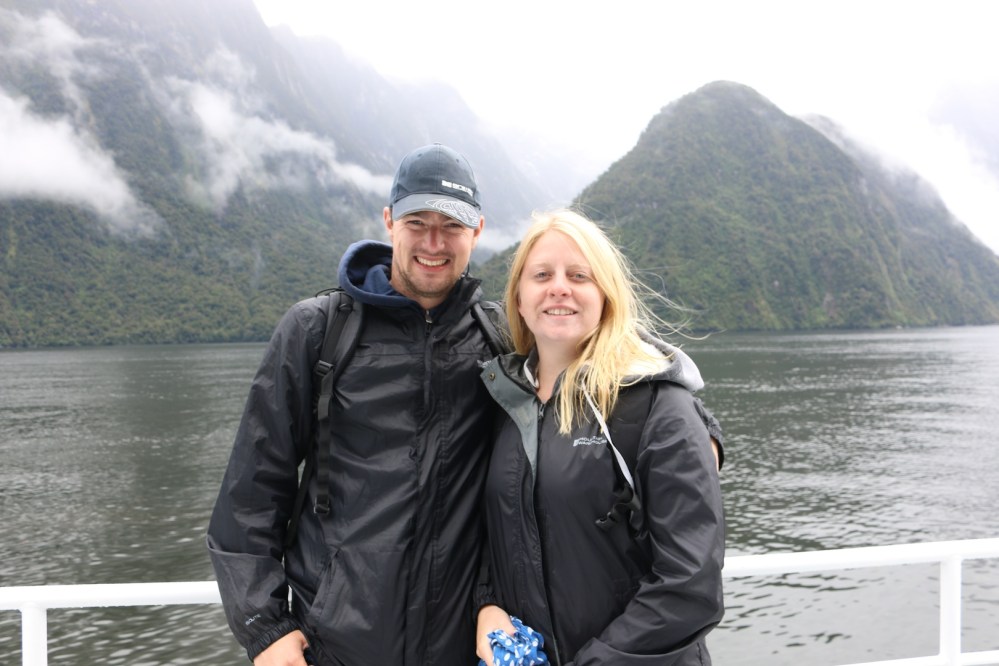
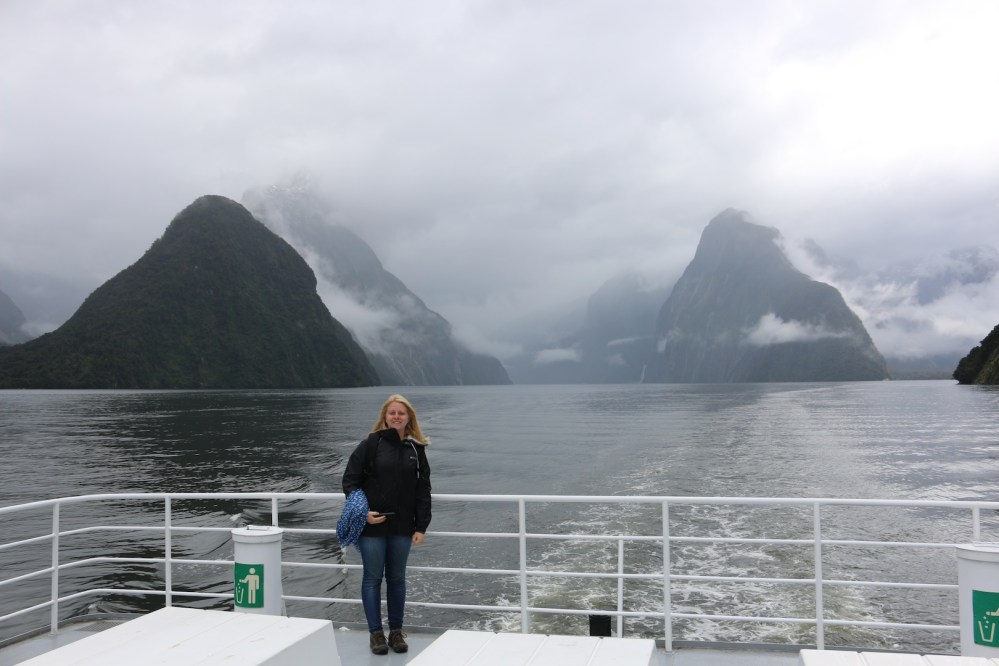
On the way back we didn’t stop too may times as we were all a little cold and wet. We made it back in to Te Anau and knew that we had made the right choice with the company we went went. The whole day was great. Reece had told us about a free bird sanctuary that we could visit near our holiday park so we headed there after warming up. Here we got to see the Tekahe, which was believed to have been extinct for many years. Luckily, it was found in the Fiordland Region and now there is a program to incubate the eggs and protect the chicks from predators, just like the program we saw in Franz Josef for the Rowi Kiwi chicks. We also got to see the cousin of the Kea, the Kaka and some other native birds. It was great and completely free.


The whole day was exhausting so we called it a night. We would need our energy as the next stop was Queenstown.
 Simon and Becky's travels